
ProblemUdhaar
When a customer pays you in goods, not cash
The tailor offers stitching, the farmer offers wheat, the electrician offers a day of work. Settling udhaar without cash is fine, if you price it first.
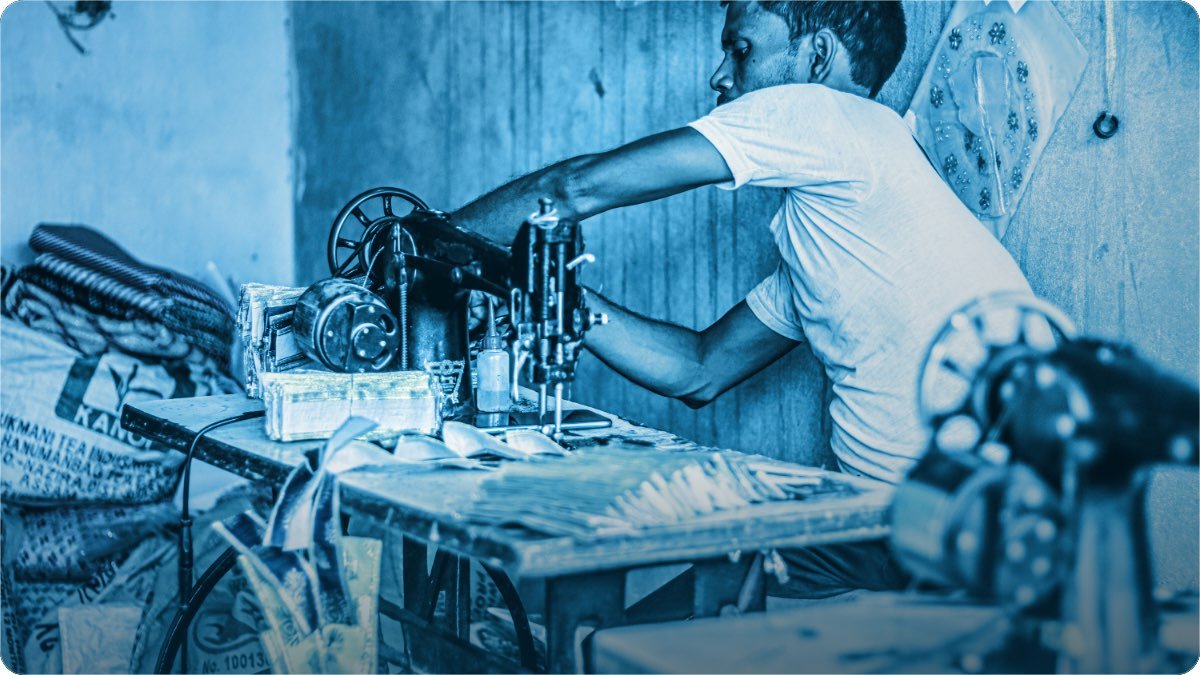
Settling a khata with goods or labour instead of cash is honest and old, and it goes wrong in one place only: the price. Fix the value in rupees before anything is delivered, write it on the page as a payment of that amount, and never accept something your household did not already need.
The tailor who wants to stitch instead of pay
Rashid has owed you Rs 4,200 since the start of the season. He is not avoiding you. He passes your shop every day, he still greets you properly, and every time you raise it he says the same thing: work is slow.
Then one evening he offers something else. He is a tailor. Your children need clothes for the coming season anyway. He will stitch six suits and the khata is closed.
For a second it sounds like the whole problem solving itself. And it can be. Deals like this have settled debts in every bazaar for as long as there have been bazaars, and refusing one on principle is a way of turning a paying customer into a defaulting one.
But notice what has just happened to the conversation. A minute ago there was one number in it, Rs 4,200, and both of you agreed on it. Now there are two numbers, and only one of them has been said out loud.
Why it is not a bad deal by itself
Start with the honest case for saying yes, because most shopkeepers say no for the wrong reason.
A man who has no cash but has skill or stock is not the same as a man who will not pay. He is short of one particular thing. If what he has is something you were going to buy anyway, you are both better off: he clears a balance that was eating at him, and you get something you needed without taking cash out of the shop.
There is a second gain that does not show anywhere. A khata that closes with a handshake keeps a customer. The alternative path, months of asking, is the one that eventually ends the relationship as well as the balance, which is the whole argument in the udhaar that has been sitting for a year.
So the question is never whether such a settlement is acceptable. It is whether this particular one, at this particular price, leaves you where the cash would have left you.
Fix the value in rupees before anything moves
Here is where the money is lost, and it is always lost the same way.
Say a tailor owes Rs 4,200 and offers to stitch instead
Made-up figures, chosen to show the shape. Put his real rate and your real balance into these rows before anything is delivered.
Rashid does not say "six suits for Rs 4,200". He says "six suits and we are clear". Six suits at his rate is one number. Six suits at what he would have charged you as a customer is another. Six suits of stitching he was going to do in a slow week, using his own dead time, is a third. None of these are dishonest. They are just different, and whichever one goes unmentioned is the one you will end up paying.
So say the number first, before he brings anything. "Your rate for a suit is Rs 700, so six suits is Rs 4,200 and the khata is clear." Now there is one number in the deal again, and it is the same one you started with.
If he wants a different rate because it is a settlement rather than an order, that is a normal conversation and worth having openly. What is not worth doing is discovering the rate afterwards, when the cloth is already cut and neither of you can go back.
The three questions before you say yes
Ask these in order. If any answer is no, the deal is a loss dressed as a settlement.
Three questions before you accept goods instead of money
- Was your household going to buy this anyway?
- Does it have a rate you can both name without arguing?
- Is it delivered soon, or spread over weeks?
- Is its value close to the balance, not far above it?
- Taking it because refusing feels rude
- Taking it because he has nothing else to offer
The first question is the one shopkeepers skip: did your household actually need this? Six suits you were going to buy anyway is Rs 4,200 recovered. Six suits you did not need is Rs 4,200 turned into cloth in a cupboard, and your shop still has to find the cash it was short of.
The second is whether you can price it without arguing. Anything with a public rate is easy: stitching, a load of bricks, a day of electrical work, a sack of wheat at the market rate. Anything with no rate is hard, and hard-to-price things are where friendships are damaged.
The third is timing. Cash settles instantly. A promise of six suits settles over three weeks, during which your money is still outside the shop, and if the work stops halfway you now have a half-finished obligation instead of a clean balance you could still chase.
Start your digital khata today
Free to start. Works offline. English, Roman Urdu & Hinglish. Your customers get their app free, forever.
Write it as a payment, not as a favour
This is the part that gets forgotten, and forgetting it is how a settled khata reopens six months later.
Write it as a payment
- "Payment Rs 4,200, six suits stitched", with the date
- The agreed rate written before the work begins
- Part delivery entered as a part payment
- The remaining balance left open on the page
- One line either of you can read a year from now
Do not write it as a favour
- A line drawn through the page and nothing else
- The single word "cleared", with no amount
- Keeping the deal in your memory until the goods arrive
- Closing the whole balance for half the work
- Recording it as a discount so the page looks tidy
The moment the goods or the work are delivered, write a payment on his page for the agreed rupee amount, with a note saying what it was for. Not "settled". Not a line through the page. A payment of Rs 4,200, dated, with the words "six suits stitched" beside it.
Three things follow from that one line. His balance goes to zero the same way any payment takes it to zero, so your own totals stay true. Anybody reading the page later, including you, can see what happened rather than guessing at a mystery. And if he ever says the work was never fully done, the page shows what both of you agreed to at the time.
Do the same in reverse if the settlement is partial. Four suits against Rs 2,800 leaves Rs 1,400 owing, and that remaining balance must sit on the page like any other, not in your head. A khata that is one-third closed by cloth and two-thirds open in rupees is exactly the kind of page that turns into an argument about what was already paid.
If your khata is on paper, the note goes in the margin. If it is in an app, the payment note travels with the entry, which is the same discipline with better handwriting.
What it quietly does to your profit
There is one thing to be clear-eyed about, and it is the reason not to make a habit of these settlements.
Cash coming into your shop buys stock, and stock sells at a margin. Cloth coming into your house does not. Every settlement in goods is money that leaves your working cash and does not come back into it, even when the deal is perfectly fair on price.
That does not make it wrong. It makes it a household purchase and a debt recovery at the same time, and it should be judged as both. One or two a season is sensible. A shop where a quarter of the recovery arrives as goods is a shop that will feel short of buying money every single month without understanding why, which is the same illusion described in working out your shop's real profit.
When to say no, and how to say it
Say no when you cannot price it, when you did not need it, or when what is offered is worth far more than the balance.
That last one traps kind people. A man who owes Rs 4,200 offers you a bicycle worth Rs 15,000 because it is what he has. Accepting it makes you the buyer of a used bicycle at a price neither of you set properly, and it leaves him feeling he overpaid, which is a worse ending than the debt. If the item is much bigger than the balance, help him sell it and take your money from what he gets.
Say no the same way you refuse anything else at the counter: about the shop, not about him. "I keep the khata in cash, that is how I buy stock." That sentence is true, it is not a judgement of his offer, and it leaves the door open for a smaller cash arrangement instead.
And be careful when the offer comes from a relative, because the price conversation is the one nobody wants to have and the one that decides everything. The same rule that makes udhaar for family and friends survivable applies here too: agree the number early, out loud, while everybody is still comfortable.
Start your digital khata today
Free to start. Works offline. English, Roman Urdu & Hinglish. Your customers get their app free, forever.
Common questions
Is settling a khata with goods a bad practice?
No. It is normal and often sensible. It becomes bad only when the rupee value is agreed after delivery instead of before, or when you accept something your household had no use for.
What rate should I use for his work?
The rate he charges his own customers, unless you both agree on something else out loud. Using his public rate keeps the deal explainable to anybody, including him, months later.
He offers something worth more than he owes. Should I take it and pay the difference?
Only if you genuinely wanted the item at that price. Otherwise you have bought something you did not want and turned a recovery into a purchase. Helping him sell it and taking cash is usually the better path.
How do I record a settlement in goods?
As a payment of the agreed rupee amount, on the date it was delivered, with a short note saying what was given. Never as a line through the page or the word "settled" on its own.
What if the work is only half done and he stops?
Then only the delivered part is a payment. Write what was actually received, at the agreed rate, and leave the rest of the balance open. That is why fixing the rate per item, rather than for the whole lot, is safer.
Should I offer this to customers who are struggling?
Rarely, and never as a first move. Suggesting it can sound like you have given up on being paid in cash. Let the customer raise it, then price it properly.