
MoneyCustomers
The first sale of the day and the rate you give it
Bohni, the first sale of the day, is a custom worth keeping. The rate cut that rides on it is not. Work out what that cut costs in a year and close the leak.
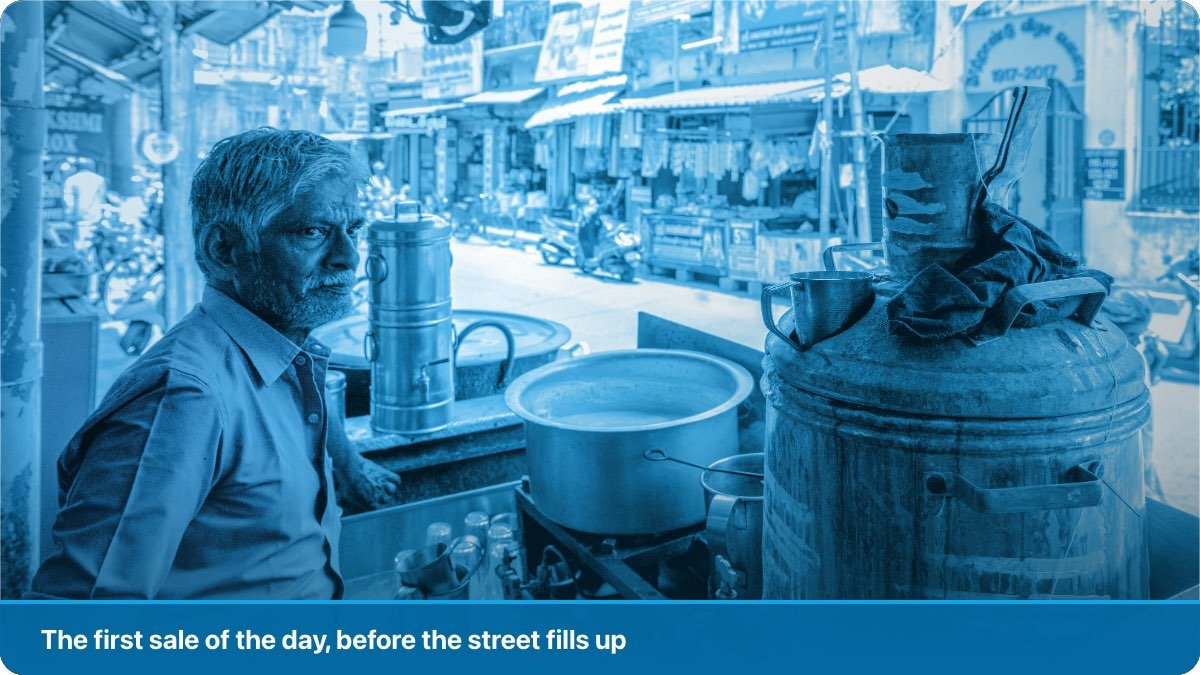
Keep the bohni, the first sale of the day, and drop the rate cut that rides on it. Take it in cash. Add a small fixed extra if you like. Never give a lower rate to whoever walks in first: that is a discount handed out every day to nobody in particular, and over a year it costs money.
What bohni is, and what is right about it
Bohni is the first sale after the shutter goes up. Across the bazaar it is read as a sign of the day ahead, and a shopkeeper will go a long way not to lose it. He will not send the first customer away empty-handed or write it as udhaar (the credit you give). And very often he takes something off the rate so the sale closes.
Three parts of that are plain good business. Keep them.
A shop that opens on time and sells early sets its own rhythm. The first sale wakes the counter, puts the first notes in the galla (your cash drawer), and gets you moving before the busy hour. The first customer also tells you what kind of day it is: a labourer buying two eggs says one thing, a woman with a written list says another.
And the rule that bohni is never udhaar is worth more than most shopkeepers realise. At eight in the morning the drawer holds whatever you left in it for change and nothing else. A sale on credit at that hour puts nothing in the drawer at the moment it most needs something. Refusing it is not superstition. It is cash management with an old name.
At 8:10 on a Monday morning Saleem has the shutter half up on his general store and is counting the change he left overnight. A man he has never seen asks for rice, cooking oil and tea: Rs 700. Saleem does the sum and says, "First sale of the day. Give me Rs 660." The man had not asked for anything off. He pays, and Saleem drops the notes in the drawer.
Everything about that moment is right except one number.
The discount that is aimed at nobody
Every other discount you give has a reason, even a weak one. A regular gets something off because he comes every day. A big order gets something off because it is big. A customer who asks for a discount at least made you decide.
The bohni cut has no reason attached to the person at all. It goes to whoever was walking past your shop earliest. Not the loyal customer, not the big buyer, not the one who pays on time. It is a discount aimed at nobody, and a discount aimed at nobody buys you nothing: no loyalty, no bigger order, no faster payment.
Nobody costs it, because it never appears anywhere. No book has a line that says "bohni discount". It is Rs 30 here and Rs 50 there, each too small to notice, and it happens as many times as you open the shutter.
What forty rupees a day comes to
Put a number on it. The exact figures do not matter; the shape does.
Say your first sale averages Rs 700 across the year, some mornings Rs 150 and some Rs 3,000. Say you take Rs 40 off it, close to what Saleem did, and the shop opens every day.
A year of bohni cuts, worked out
Only an example. Put your own average first sale and your own cut into the same lines; the shape holds.
Rs 40 looks like nothing. Rs 1,200 a month looks like a phone bill. Rs 14,600 a year looks like a supplier's invoice, and that is what it is: an invoice you have been paying to strangers, one morning at a time.
The line that should stop you is the margin line. If your goods carry an average margin of fifteen percent, a Rs 700 sale holds about Rs 105 of profit. A Rs 40 cut takes thirty-eight percent of that. You did not give away six percent of a sale. You gave away more than a third of what it was going to earn you.
Now hold it against the whole shop. Say it clears Rs 45,000 in an ordinary month after stock and expenses, about Rs 1,500 a day. Rs 14,600 in bohni cuts is nearly ten days of profit a year, handed to whoever walked in first. If your real profit is smaller, the share is bigger. Do the sum with your own numbers.
Four rules that keep the custom and close the leak
The custom does not have to go. It needs rules.
1. Bohni is cash, never udhaar. It protects the drawer at the hour it is emptiest, and it gives you a sentence nobody in the bazaar will argue with. This rule alone is worth more than the discount ever cost.
2. If you give something, give a thing, not a rate. A rate cut comes straight out of your margin. A small extra comes out of your buying rate. Rs 40 off the total costs you Rs 40 of profit. A packet of biscuits you sell for Rs 40 costs you perhaps Rs 32, and the customer values it at Rs 40. You spent less, he received the same, and the price on your shelf never moved.
Rs 40 off the rate, or a Rs 40 item as an extra
3. Cap it in rupees, never in percent. If the bohni is "a little off", make "a little" a fixed number: Rs 20, Rs 30, whatever fits your shop. Five percent on a Rs 700 sale is Rs 35. Five percent on the morning a contractor walks in for Rs 9,000 of material is Rs 450, given away because he arrived at eight instead of ten.
4. Never let the first customer set the rate for the day. Whatever he paid is the rate he carries out of the door, to his wife, his neighbour and the man at the tea stall. By noon somebody is at your counter saying, "You gave it to him for Rs 660." The rate you set with care in the evening cannot survive being undercut by you every morning.
The regulars who learn to arrive first
Here is the part almost nobody notices, and it turns a small leak into a standing one.
Customers are not fools. A man who got Rs 40 off on Monday because he was first will, with no bad intention, try to be first again on Wednesday. Three or four times and arriving first is his habit. Then a second regular works it out. Then a third.
Within a few months your bohni is no longer a blessing on a passing stranger. It is a private rate enjoyed by three or four regulars who have arranged their mornings around it, people who would have bought at full rate anyway. Say four of them share your mornings. Each buys at Rs 40 under your rate roughly ninety times a year. That is not bohni. That is a rate card you never wrote.
If you can name who your first customer usually is, the custom has already stopped being a custom. You keep those regulars the way you keep any regular customer: by being fair to them all day, not by being cheap to them at eight.
The morning the custom really protects you
One morning the bohni rule earns its keep completely: the morning the first customer wants it on udhaar.
At 7:50 Bilal has just opened his hardware shop. There are eleven Rs 10 notes and some coins in the drawer, because his son took the rest home last night as usual. Kamran, who has an open khata of Rs 4,200, comes in for a tin of paint and two brushes, Rs 1,350 together. "Put it in the khata," he says. "I will settle everything on Saturday."
Bilal has no wish to lose a customer at the start of a day. But he knows what a drawer with Rs 110 in it means at 8:30, when the next three people need change. So he says it plainly, the same way every time.
"Kamran, the first sale is cash in this shop. Every day, for everyone, not just for you. Pay this one now and the rest of the week goes in the khata as usual."
Kamran has heard it before and does not take it personally, because it is not personal. He pays, and Bilal's morning begins with something in the drawer to make change from.
Notice what made that easy. Bilal did not judge Kamran. He did not say the khata was getting high, though it was, and he did not open a conversation about how much udhaar a customer should carry. He pointed at a rule everyone already knew. A customer accepts a rule far more gracefully than he accepts a doubt about himself.
If Kamran truly cannot pay, he takes what he can pay for. A shop with nothing in the drawer at eight cannot serve the next twenty people.
What to give on a bohni, and what never to give
Give this
- Cash in the drawer: take the first sale in notes, every day.
- A small fixed extra, priced at what it cost you.
- The same rule for everyone, said the same way each morning.
- A warm start: a greeting, a quick sale, the shutter fully up.
- The full rate on the goods, with a straight face.
Never this
- A cut in the rate. It comes out of the margin, not the price.
- A percentage. A big first order turns it into a big discount.
- Udhaar. At eight the drawer has nothing to give back.
- A different deal for the regular who has learned to arrive first.
- A rate the customer can repeat at the tea stall by noon.
Write the first sale like every other one
The bohni becomes ordinary in the books the moment you record it like everything else. In Wasoolo the first sale of the day goes into the day's entries like any sale, the cash goes to the galla account, and the drawer on your phone matches the drawer under your counter. Nothing is special about it except the time.
Record the sale at the price you actually took. If you cut Rs 40, the entry says Rs 660, not Rs 700. Because every product in Wasoolo carries the buying rate you gave it, the profit view shows the margin you really kept, and a month of first sales at Rs 660 shows up as exactly the thinner line it is. That is the number this article asked you to imagine. The app stops you having to imagine it.
The khata does the other half. When the first customer asks for udhaar, his khata is already open on your phone with his running balance where both of you can see it. "This one is cash" becomes a line you read off your own rule, not a comment on his name. Wasoolo is 100% free to download, and this is one of the smallest habits it makes easier to keep.
Tie it to the daily cash count and the circle closes: first note in, last note counted, and no discount hiding between them.
Everything above, in five lines
- 1Take the bohni in cash, alwaysThe drawer is emptiest at eight. Credit at that hour puts nothing in it.
- 2Give a thing, not a rateAn extra costs its buying rate. A rate cut costs the whole margin.
- 3Cap it in rupeesA fixed Rs 20 or Rs 30, never a percent of the order.
- 4Never let the first buyer set the day's rateWhatever he paid is what the street hears by noon.
- 5Watch who arrives firstIf you can name him, the custom has become his private rate.
Start your digital khata today
Free to start. Works offline. English, Roman Urdu & Hinglish. Your customers get their app free, forever.
Common questions
Is it wrong to give anything at all on the first sale of the day?
No. A small extra for the first customer is a fine custom. The point is what you give: a fixed thing at its buying cost, not a rate cut that comes out of your margin and travels down the street by noon.
My customers expect the bohni discount. How do I stop without losing them?
Replace it rather than removing it. Say that from now on the first customer gets a small extra with the order instead of money off. Almost nobody objects to receiving a thing. The few who push back were buying the discount, not the goods.
What if the first customer's order is very large?
This is why the bohni should be a fixed rupee amount, never a percentage. A Rs 20 extra on a Rs 9,000 order is a courtesy; five percent off it is Rs 450 gone because of the clock. Big orders get their own rate through a proper conversation.
The first customer only ever wants it on udhaar. What do I say?
Say the rule, not a judgment: "The first sale is cash in this shop, every day, for everyone." Then offer the normal path for the rest of the week. Because it applies to everybody, nobody is singled out.
Does Wasoolo have a special setting for the first sale?
No, and it does not need one. You record the first sale like any other, the cash goes to your galla account, and the profit view shows what the month's discounts came to because every product carries its buying rate. The habit is yours; the app keeps the numbers honest.
How do I know whether my bohni has turned into a regular's private rate?
Ask yourself who your first customer usually is. If you can name him, the discount is no longer random. Watch for a fortnight and note who arrives first. Three or four repeat names means the custom has become a rate card, and the fixed-extra rule takes it back without a quarrel.
Not sure what your morning habit costs in a year? Send us a message with your average first sale and what you take off it, and we will work the year out with you.