
CompareShop money
Spend on the shop's look or on more stock?
You have Rs 60,000 spare. Paint, shelves and a board, or more goods on the shelf? Some looks pay for themselves fast, and some stock never pays at all.
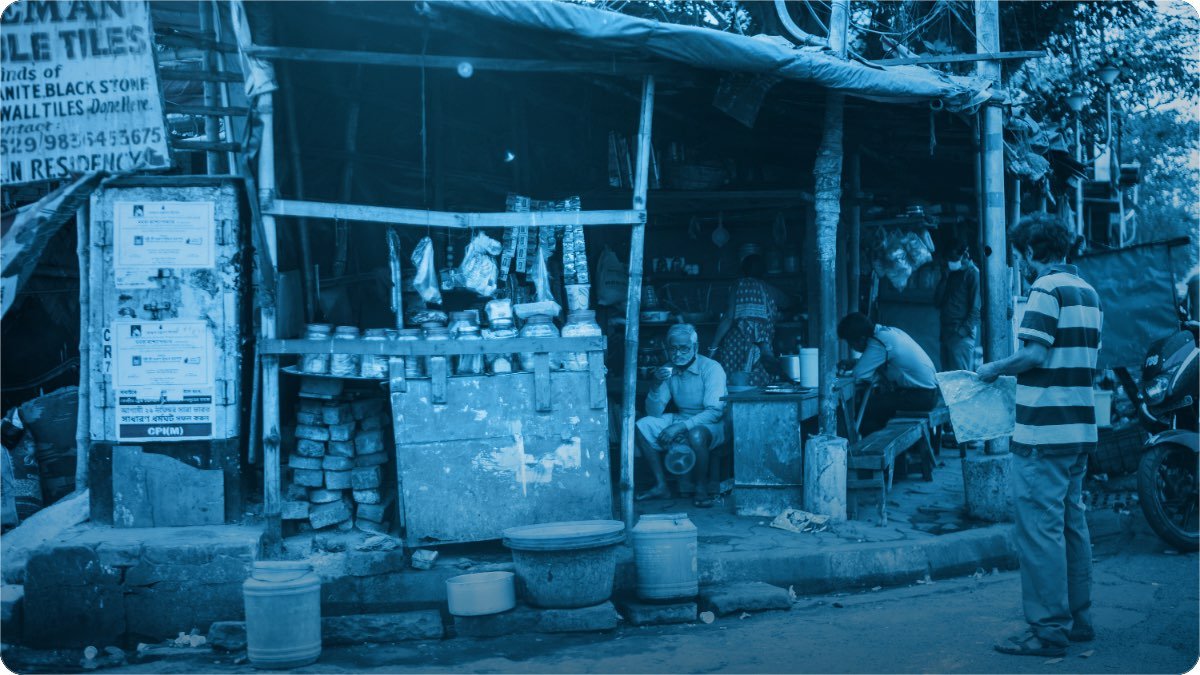
Fix the cheap things that cost you sales first: light, a readable board, shelves that show what you have. Those are small and they pay back fast. Put the rest into stock people already ask for. Tiles, glass counters and new furniture come last, after the shop is already selling more.
The Rs 60,000 question
You have Rs 60,000 that is not needed for anything else. This is the good problem, and it does not come often.
One voice says: do up the shop. Paint the front, put in proper shelving, get a board made with the name on it, add two more lights. It has looked tired for years and you know it.
The other voice says: goods. Sixty thousand rupees of stock is sixty thousand rupees that comes back with a margin on top, again and again, and shelves full of things people want are the only reason anybody walks in.
Both voices are right sometimes. The mistake is treating it as a matter of taste, when it is actually a question with an answer: which of these two is currently costing you sales?
What each rupee is actually buying
The two spends behave completely differently, and knowing how is most of the decision.
Stock is money that returns. Rs 60,000 of goods that sell in six weeks comes back as Rs 60,000 plus a margin, and then you can do it again. It is the fastest loop in the shop. But it only works if the goods actually move, and money in slow stock is money asleep.
A shop's look is money that leaves. Paint does not come back. What it can do is raise everything that happens afterwards, permanently and slightly: a few more people stop, a few more find what they wanted, a few more come back. That is a small percentage on every future month.
So the honest way to compare them is: how much extra selling would this look cost me if I did not fix it, and how quickly would that stock turn over? Everything else is opinion.
The same Rs 60,000, two completely different behaviours
The look spends that genuinely earn
Some improvements are not about looking nice. They are about removing a reason somebody did not buy from you, and they are usually the cheapest items on the list.
Light. A dark shop reads as closed, or as poor, and people walk past it in the evening without deciding to. Better lighting is the single most reliable improvement in a small shop, and it usually costs very little.
A board people can read from across the road. With your name, what you sell, and a phone number. It works all day, in a way no other spend does, and it also makes you findable, which quietly matters when a customer wants to send somebody to fetch something.
Shelving that shows what you have. Goods stacked behind the counter in boxes might as well not exist. Half of what a small shop fails to sell is simply not visible, and the customer does not ask because he does not know.
A clear counter and a clean floor. Costs nothing at all, and both change what people think about your goods before they have touched them.
The cheap fixes that remove a real reason not to buy
- Enough light that the shop reads as open from across the road
- A board with your name, your line of goods and a phone number
- Shelving that shows the goods instead of hiding them in boxes
- A clear counter and a clean floor: costs nothing
- Prices visible on the things people ask the price of most
- Tiles, glass counters and new furniture: later, if at all
Notice that these are all small. You do not need Rs 60,000 for them, you need perhaps a fifth of it. That is why they come first: they take the least money and remove the most friction.
Start your digital khata today
Free to start. Works offline. English, Roman Urdu & Hinglish. Your customers get their app free, forever.
The look spends that mostly do not
Then there is the other kind, and shops spend far more on this half.
Tiles on the walls. A glass counter. New furniture. A large expensive board with lights in it. A fancy paint job on a shop that nobody could see properly in the first place.
None of these is wrong exactly. They just do not change what a customer decides. People buy from a small shop because it has what they want, at a fair price, close by, from somebody they trust. A tiled wall is not on that list.
There is one exception worth naming. If you are selling something where appearance is the product, like clothes, jewellery, phones or gifts, then the display case is not decoration, it is your shelf. Judge it as stock, not as paint.
Otherwise, the test is simple and slightly cruel: would a regular customer notice if you did this, and would he buy anything more because of it? For tiles the honest answer is that he would notice, say something kind, and buy exactly the same amount.
None of this means never. It means later, and in that order. A shop that has already grown its selling can afford the expensive half out of what the growth produced, and by then you also know what your shop actually needs rather than what you imagined on a slow afternoon. The shops that get into trouble are the ones that spend the whole amount on the front, discover the shelves are thin, and then buy stock on supplier credit to cover it.
When more stock is the right answer
Stock wins the moment you can name what you would buy and why.
The strongest case is the item customers ask for and you keep not having. Every one of those is a sale walking out and, worse, a reason for somebody to discover another shop. If you have three or four of those, buy them before you buy anything else.
Second case: depth on your fastest sellers. If you run out of the same thing every week, you are turning away money and spending your own time on extra buying trips.
Say Rs 40,000 goes into goods that sell in six weeks
Say you put Rs 40,000 into goods that turn over in six weeks at a margin of one rupee in eight. That is Rs 5,000 a cycle, and in a year those cycles do not stop. Now compare it with the same Rs 40,000 spent once on tiles, and you can see why stock usually wins on paper. That comparison is the same arithmetic as how much your shop must sell before you earn, looked at from the other end.
There is a third stock case that is easy to miss: filling a gap beside something you already sell well. If your tea moves, the sugar, the biscuits and the milk powder beside it move too, because people buy the whole habit rather than one item. Adding depth around a proven seller is far safer than adding a new line nobody has asked you for, and it needs no new customers at all.
The catch is in the words "turn over in six weeks". Everything above depends on that. Before you buy, look at how long the last lot of the same item took to sell, and be honest about it rather than using the best week you remember.
When more stock is the wrong answer
Money in stock is money you cannot use, and every shop has some of it stuck.
Look along your own shelves before you add anything. If there are items that have been sitting since you cannot remember when, you already have a stock problem, and buying more will make it bigger, not smaller. The whole cost of that habit is set out in the stock that never sells.
Three signs that stock is the wrong spend right now: your shelves are already full of things that move slowly, you are buying more of an item because it was cheap rather than because it sells, or you are short of cash for supplier payments while the shelves are heavy. In all three cases, the shop does not need more goods. It needs the goods it has to move.
And there is a third option people forget: keep the money. Cash in hand covers a bad week, a supplier who wants payment early, or a chance to buy something at a good rate. Not spending is a legitimate answer, especially if this is the only spare money you have.
Three tests to decide in your own shop
Forget the general argument and answer these three about your own shop.
One: walk in as a stranger. Stand across the road at dusk and walk in as though you had never been there. Is it bright? Can you read the board? Can you see what is for sale without asking? Every no on that list is a look problem, and it is probably cheap.
Two: write the list of things people asked for and you did not have. Keep it for two weeks at the counter. If it is long, that is your stock answer, and it is specific: not "more stock", but these six items.
Three: check what is already asleep. Add up roughly what is sitting on your shelves that has not moved in months. If that number is large, the money should go into moving it, not into adding to it.
Then do them in that order, and do not do everything in one week. Fix the light and the board first, because they are cheap and they take a few days. Buy the asked-for items next and watch them for a month. Whatever is left is the honest budget for the expensive half, and by then you will have a much better idea of whether you want it at all.
Most shops that do these three tests end up with the same plan: spend a small amount on light, the board and shelving, put most of the rest into the items customers actually asked for, and keep some back. And when you are weighing a bigger version of this decision, growing the shop you have covers the same ground on a larger scale.
Keep score, or you will never know which one worked
Whatever you choose, the mistake is spending the money and never checking what it did.
Write down what you expected before you spend. "The board should bring a few more people in from the road." "These six items should sell out in a month." Then look at what actually happened, because a guess you never test becomes a belief, and beliefs are what make shops spend the same money on the same wrong thing again and again.
This is where a record earns its keep. In Wasoolo the paint, the board and the electrician are recorded as expenses, so a month later you can see exactly what the improvement cost rather than half remembering it. Stock has its own side: each product carries its buy rate, so the profit view shows what an item actually earns instead of what you assume it earns.
Then the comparison becomes real. You can see whether the fast items you bought deeper actually sold, and whether the slow ones you already had moved at all. That is the difference between the same Rs 60,000 decision being an argument the next time and being a calculation, which is also the point of working out your shop's real profit.
Start your digital khata today
Free to start. Works offline. English, Roman Urdu & Hinglish. Your customers get their app free, forever.
Common questions
My shop looks old and I feel embarrassed about it. Is that not reason enough?
It is a real feeling and it does affect how you stand behind your own counter, so do not dismiss it. But start with the cheap half: light, the board, shelving, a clear counter and a clean floor. Those remove the embarrassment for a fraction of the money, and they also happen to be the parts customers actually respond to.
A neighbouring shop did up his front and his sales went up. Should I copy him?
Find out what actually changed before you copy anything. Very often the visible work came with things you cannot see from the road: new lines added, longer hours, better lighting inside. Copying the paint alone and expecting the result is how a lot of money gets spent for nothing.
How much of spare money should go to stock as a rule?
There is no fixed share, and anybody who gives you one is guessing. Do the three tests instead. Most shops that do them honestly find the cheap look fixes cost a small part of the money, the specific items customers asked for take most of the rest, and keeping a little back is worth more than either.
What if I do the shop up and customers think my prices have gone up too?
It happens, and it is worth thinking about before you spend on the expensive half. Keep your rates visibly the same, keep the everyday items in the same place, and do not change the goods and the look in the same month. A shop that looks smarter but feels the same is what you are aiming for.
Should I borrow to do the shop up?
Be very careful with borrowed money spent on things that do not come back. Stock at least repays itself if it sells; paint does not. If you do borrow, borrow for the cheap fixes and the specific items customers are asking for, and keep the repayment small enough that a bad month cannot hurt you.
My landlord may not renew. Does that change the answer?
Yes, completely. Anything fixed to a building you might leave is money spent on somebody else's property. In that situation put your money into stock and into things you can carry with you, like shelving and a board, and leave the walls alone until you know where you stand.