
CompareShop money
Open a second shop or grow the one you have?
A shop falls empty nearby and you have four days to decide. Test whether your first shop is really full, count what each road costs, then try before you sign.
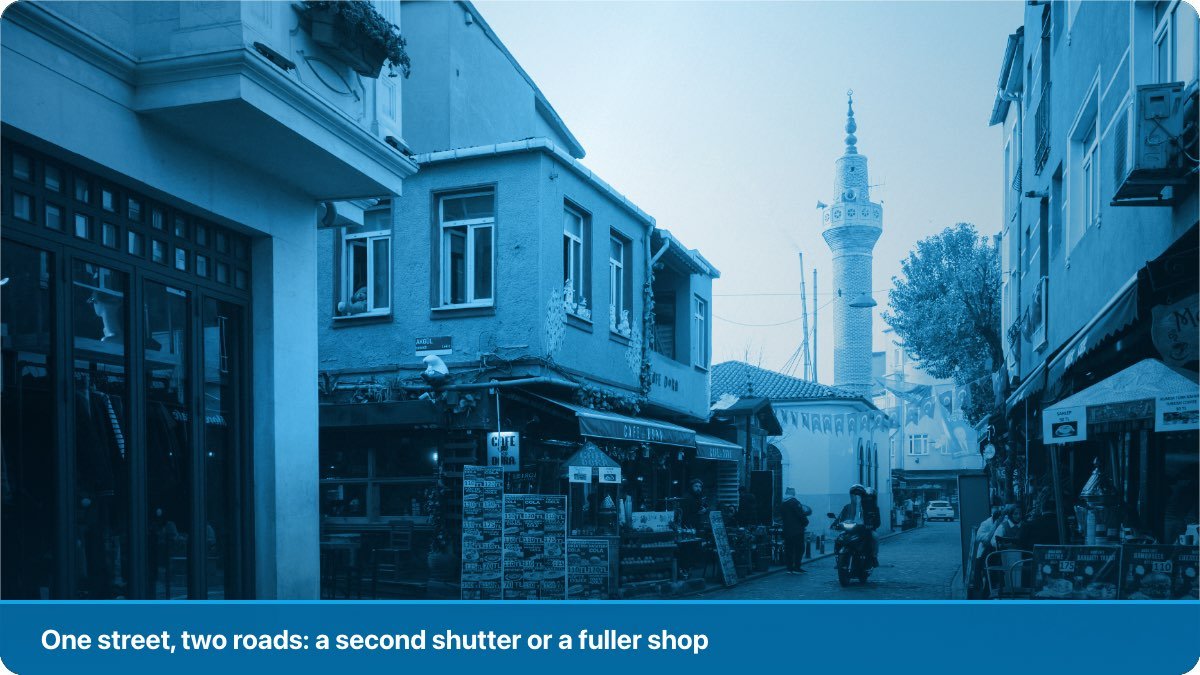
Before you rent a second shop, find out whether the first one is full. Most shopkeepers are not out of space, they are out of hours. A second shop doubles the rent, the stock and the risk from day one, while growing this one usually costs less and gives you an answer faster.
The question always arrives at the wrong moment
It comes on a good week. Two months of steady sales, some cash sitting in the account for once, and then a shop falls empty three streets away, or a cousin says the market in the new colony has nothing decent yet.
You have about four days to decide, because somebody else wants the same place. So the decision that will shape the next five years of your life gets made in the time it takes to arrange the deposit.
The four-day pressure is real, but it is somebody else's pressure. Shops fall empty every month. The one thing you cannot get back is the money and the year you put into the wrong one, and no rent agreement is worth signing on a schedule set by the man collecting the rent.
So slow the decision down with three questions instead of one. Is my first shop actually full? What does each road really cost? And which one fits the hours and the money I actually have, rather than the ones I hope to have?
First test: is your shop actually full?
A second shop makes sense when the first one cannot hold any more business. Most cannot say that honestly, and the test is not how busy it feels.
Is the shop you have actually full?
- You turn customers away most evenings, not just make them wait
- Every shelf holds goods that moved in the last three months
- You already open every hour the street is busy
- The lines your street asks for are all already on your shelves
- There is a second person who can hold the counter for a week
- Nothing on the shelf has been sitting there since last season
Look for the real ceilings. Are you turning customers away, or are they just waiting a little? Is the shelf genuinely full of goods that sell, or is a third of it holding stock that has not moved since last season? Are your best hours crowded and your afternoons empty?
The most common answer, by a distance, is that the shop is not full at all. It is holding money in the wrong stock, opening for fewer hours than the street does, and carrying a range that has not been reviewed in two years. Every one of those is far cheaper to fix than a new rent agreement, and each of them frees cash you would otherwise borrow.
There is one more ceiling worth checking, and it is the one people miss: your own hours. If you already work twelve hours and cannot leave the counter for a day, the shop is not full, you are. That is a different problem, and opening a second shop makes it much worse rather than better.
Be honest about the street too. If the same three streets already have four shops selling your goods, a second one of yours does not create new demand, it splits your own.
What a second shop costs before it sells anything
Ask any shopkeeper what a second shop costs and he will say the rent. The rent is usually the smallest part of it.
Say a second shop opens in the new colony next month
Count all of it. The deposit, often several months. The rent itself, every month, from a day when the shop has no customers. Fittings, shelves, the board, the electricity connection. And the big one everybody underestimates: a whole second set of stock, which has to be broad enough to look like a real shop from the first morning, because nobody comes back to a shop that had nothing.
Then count the running cost that starts immediately. A helper for one of the two shops, because you cannot be in both. His wage, his advances, and the risk that comes with a counter you are not standing at. Two electricity bills, two sets of small repairs, two lots of everything.
And count the quiet cost that never appears on paper: your attention, split. For the first six months the new shop will take most of your time, and the old one, the one that actually earns, will run on the helper's judgement. Many second shops are paid for by the fall in the first shop's takings, and the owner never sees it happen because he is not standing there any more.
Work out how much the new shop must sell every month just to stand still, before it earns a single rupee for you. If you have never done that sum, the break-even calculation is exactly the tool for it, and it is worth doing before the deposit, not after.
Start your digital khata today
Free to start. Works offline. English, Roman Urdu & Hinglish. Your customers get their app free, forever.
What growing this one costs instead
The other road is quieter and almost nobody writes about it, because there is nothing to announce to the family. But it is usually the road with the better numbers.
Growing the shop you have means one of four things, and they are all small. Selling more to the customers you already have. Adding a line the street asks for and nobody nearby stocks. Opening the hours the street is busy and you are shut. Or clearing the dead stock and putting that cash into things that actually move.
None of those needs a deposit. Most of them need a few thousand rupees and a decision, and every one of them can be reversed in a month if it does not work. That is the real difference between the two roads: one is a test, and the other is a marriage.
The reason people skip this road is that it does not feel like progress. A second shop is visible. A better-stocked, longer-open, tighter-run shop is not, until you look at the money at the end of the month. If you are not sure which of your lines is actually carrying the shop, work out where your profit really comes from before you decide anything, because the answer often changes the whole question.
The two roads, side by side
Put them next to each other honestly, with your own figures rather than the ones in your head on a good day.
The two roads, with your own figures
Neither column is the right answer for everybody. A second shop genuinely wins when your area is saturated but a nearby area is empty, when you have a person you trust completely to run one of the two, and when you can survive the new shop earning nothing for six months.
Growing this one wins in almost every other case, and especially when your cash is tight, when your family cannot spare another pair of hands, or when the shop still has obvious slack in it.
The dangerous middle is opening a second shop while the first one still has slack. Then you have two half-run shops, twice the rent, and the same total sales spread thinner.
The three things that really decide it
Strip away the excitement and there are only three questions, and all three are about you rather than the market.
Your hours. Two shops need two people who can be trusted with money, and one of them has to be you. If the second person does not exist yet, you are not opening a shop, you are hiring somebody you have not found. That is the honest version of the helper question, and it decides more second shops than any market study.
Your money. Not the money you have, the money you can lose. If losing the deposit and six months of rent would sink the first shop as well, the answer is already no, however good the location looks. Money borrowed from a committee, from family or from a supplier is still money that has to go back on a fixed date, and the new shop does not know that.
Your area. Walk the street you are considering at three different times of day, on three different days, including the busy evening and the dead afternoon. Count the people. Count the shops selling what you sell. Ask the neighbouring shopkeepers how long the last tenant lasted, because a place that empties every year is telling you something the rent does not.
Test the answer before you sign anything
You do not have to guess. Nearly every version of the second-shop dream can be tested for a few thousand rupees, and most shopkeepers never think to try.
Want to know if the new colony will buy from you? Take a stall at their weekly bazaar for a month, or send goods with somebody who already sells there. Want to know if a second location works at all? Deliver to that area for six weeks and see how many orders come. Want to know if you can run a shop you are not standing in? Take a week off from the shop you have and see what the numbers look like when you come back.
That last test is the sharpest one, and it costs nothing. A shopkeeper who cannot leave his own counter for a week is not ready to leave it half the time, and better to find that out now than after signing a three-year agreement.
Whatever the test says, write the numbers down while it is running. A test you remember instead of recording turns into whatever you wanted it to say by the time you are standing in front of the empty shop.
If you open the second one, keep the two books apart
Say you have tested it, the numbers work, you have the person, and you have signed. Then there is exactly one habit that decides whether you can manage two shops or only own them.
Keep the accounts separate from the first day. Separate cash, separate stock records, separate udhaar lists, separate everything. One mixed pile of money across two shops means you can never answer the only question that matters, which is whether the new shop is actually earning or quietly living off the old one.
This is the same discipline that keeps shop money and house money apart, applied one level up, and it is why so many second shops run for two years before anybody notices they never made money.
Wasoolo is built for this: one account holds more than one business, each with its own customers, stock, staff and figures, and you switch between them without a second login. You read both from the same phone, and neither one can borrow from the other's numbers without you seeing it. If the second shop is going to be run with somebody else's money or somebody else's hands, the rules for a shared shop are worth agreeing before it opens rather than after.
Then give it a fixed review date, six months out, written in your diary now. On that date you compare the two shops honestly and decide whether the second one is growing, standing still or feeding on the first. A decision made on a date you set in advance is a business decision. The same decision made when the pressure finally becomes unbearable is just a bad month.
Start your digital khata today
Free to start. Works offline. English, Roman Urdu & Hinglish. Your customers get their app free, forever.
Common questions
How much money should I have in hand before opening a second shop?
Enough to cover the deposit, the full stock, and every monthly cost of the new shop for at least six months, without touching the first shop's working money. If that means waiting another year, wait. A second shop opened on borrowed working capital puts both shops at risk, not one.
Is a bigger shop in the same place better than a second shop?
Usually yes, if the space is available and your street can absorb more range. It costs less than a second location, needs no second person, and keeps all your customers in one place. The exception is when your area is genuinely saturated, because a bigger shop in a full market mostly just holds more stock.
Should the second shop sell the same things?
In the beginning, yes. You already know those lines, the rates and the suppliers, and every new thing you add is another way to be wrong in a place you do not know yet. Change the range after six months once the new area has told you what it actually buys.
Can I run the second shop with a partner instead of a helper?
You can, and it solves the trust problem while creating a different one. Agree in writing who puts in what, who takes what out, who decides prices, and what happens if one of you wants out. Do it before the shop opens, when everybody is friendly, because that conversation is very hard to have later.
How long should I give a new shop before deciding it has failed?
Set the date before you open, and make it a real one: six months for a first look, a year for the decision. What matters more than the length is that the number you judge it on is written down on day one. Shops rarely fail suddenly; they get carried for two years by an owner who never fixed a date to look properly.
My family says a second shop means we have done well. Does that matter?
It matters to them and it is not nothing. Just do not let it be the reason, because the family that celebrates the opening is the same family that carries the loss. If the numbers say grow this one, growing this one is also something to be proud of, and it is easier to explain with a good year than with a second shutter.