
CompareStock
Many items or deeper stock of a few?
One shelf, two strategies. Carrying a little of everything and carrying plenty of a few pull a shop in opposite directions. How to choose on purpose.
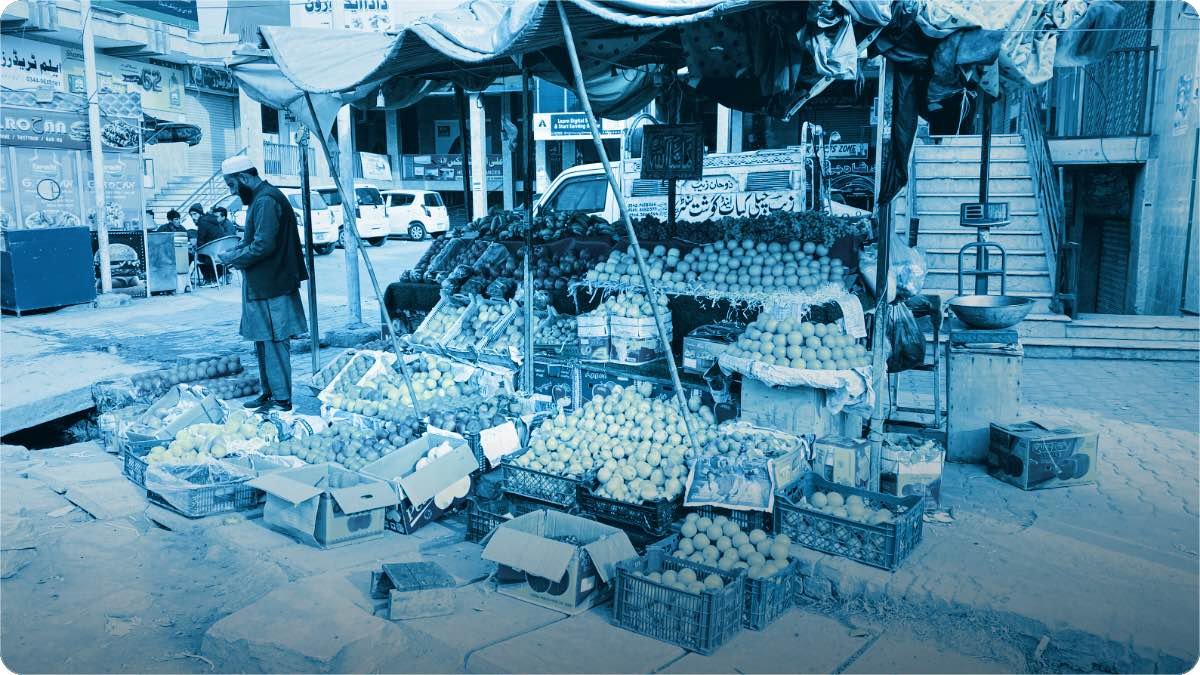
Neither wins everywhere. A shop that people walk past chooses range, so that anybody stopping finds something. A shop that people come to on purpose chooses depth, so that regulars never leave empty-handed. Your street decides which one you are before you do.
The same shelf, two completely different shops
Two shops on the same road, the same size, the same money invested in stock.
The first carries a little of everything. Four kinds of soap, two brands of tea, one packet each of a dozen things nobody asks for often. Somebody walking past can stop for almost anything and will usually find some version of it.
The second carries a quarter of the range and four times the depth. Two brands of tea but a full case of each, one soap but never out of it, and the six items that street actually buys, stacked properly.
Both shops look busy. Both owners believe they are doing the obvious thing. And they earn quite differently, because they are running two different businesses that happen to sell overlapping goods.
What each one is actually doing with your money
Underneath the shelf, this is a decision about where your working money sits and how fast it comes back.
What each choice does to your shop
Read the last row carefully, because it is the one that decides most shops. Range spreads your money across many slow-moving items, so a lot of it is standing still at any moment. Depth concentrates it in fewer items that turn over faster, so the same money goes around more times in the same period.
Money that turns over four times a year earns you four margins. The same money sitting in twelve packets that each sell twice a year earns you very little, no matter how impressive the shelf looks. That is the arithmetic underneath everything else here, and it is the same arithmetic as working out your shop's real profit.
But turnover is not the only thing that matters, which is why depth does not simply win.
When range earns more
Range is the right answer more often than the turnover argument suggests, and there are three situations where it clearly wins.
The first is a passing location. If your customers are people going somewhere else, they stop for whatever they happen to need, and what they need is unpredictable. A shop at a bus stop, on a main road, beside a school gate: for these, having something for everybody beats having plenty of anything.
The second is being the only shop nearby. If the next shop is a walk away, you are not competing on any single item; you are competing against the effort of that walk. Every line you do not carry is a reason for somebody to make the walk once, and once they have made it they may not come back.
The third is a customer base that buys a whole basket at a time. A household doing its full shopping does not want the best tea; it wants tea, soap, oil, matches and sugar in one stop. Miss two items and they finish the trip somewhere else, and the sale you lose is not the missing item, it is the basket.
In all three cases, the item that sits on the shelf for two months is not really dead stock; it is the reason somebody came in and bought six other things. That is the strongest argument range has, and it is real.
When depth earns more
Depth wins wherever people are choosing your shop on purpose rather than arriving by accident.
If customers make a decision to come to you, being out of stock is the worst thing you can do, because it breaks the only reason they walked past two other shops. A regular who finds his usual thing missing twice will try the other shop, and he may not come back even after you restock. Depth is how you keep the promise your regulars are relying on.
Depth also buys better. Buying a full case of one line rather than three packets of three lines gets you a better rate, fewer trips, and a supplier who takes your calls, and those savings are permanent rather than one-off. The trade-off between buying big and buying often is worked through in buying in bulk or little and often, and depth is what makes the better rate available at all.
And depth is simply easier to run. Fewer lines means less counting, fewer things to check for expiry, less shelf space wasted on single packets, and a much clearer view of what is actually selling. Most shopkeepers underestimate how much of their day is eaten by managing a long tail of items that contribute almost nothing.
Start your digital khata today
Free to start. Works offline. English, Roman Urdu & Hinglish. Your customers get their app free, forever.
The arithmetic on one shelf
Put the two side by side on the same money and the same space, and the difference stops being a matter of opinion.
Say both shops have Rs 200,000 sitting in stock
The middle figure is the one to sit with. Two shops with identical stock money can end a month with quite different earnings, purely because of how many times that money went around. Nothing in that comparison involved better prices, better customers or harder work.
But notice what the figure cannot show: the customers who came into the range shop for one odd item and bought a full basket while they were there. That effect is real and it does not appear in a turnover calculation, which is exactly why this decision cannot be made from arithmetic alone.
Most shops need both, in a deliberate ratio
The honest answer for a small shop is not one or the other. It is a decision about proportion, made on purpose rather than by accident.
A shelf that runs both strategies on purpose
- The top group: the lines your street buys most, never out of stock
- The middle group: steady sellers, kept at one week of cover
- The long tail: one packet each, and no reorder until it sells
- Named exceptions: slow lines kept for customers you can name
- A share of the stock money kept free for the top group's restocking
- One review each season: what moved up, what quietly stopped earning
The mistake almost every shop makes is that this ratio is never chosen; it just happens. A salesman convinces you to try a line, somebody asks for something once and you order it, a supplier offers a deal, and after two years half your money is in items you never decided to carry. Nobody ever sat down and chose that shelf.
So choose it once. Decide roughly what share of your stock money belongs to the lines that genuinely earn, and hold the rest of the range to a single packet each. A shop where the top group is always in stock and the long tail is deliberately thin is running both strategies at once, on purpose.
And review it. The lines that deserve depth change over time, and the only way to notice is to look at what actually sold rather than what feels important. The items that quietly stop earning are covered in the stock that never sells and eats your cash, and they are usually former favourites nobody demoted.
Three questions that settle it for your shop
Rather than arguing the two positions in general, answer three questions about your own street. They decide it faster than any principle.
The first is how your customers arrive. Stand at your door for one hour and watch. If most people are walking past on their way somewhere and stop on impulse, you are a range shop whether you like it or not, because impulse buying is unpredictable and you cannot predict it into depth. If most people leave their house intending to come to you, you are a depth shop, and being out of stock is your only real enemy.
The second is what the shop nearest you does. Two shops on one street with identical shelves are splitting one street's trade and both are earning half. If the shop beside you is wide and shallow, being the place that always has the six important things in quantity is a position nobody can copy quickly. If he is deep in a few lines, the gaps he leaves are yours, and they are usually cheap to fill.
The third is what your money can stand. Depth needs more money per line and gives it back faster; range needs less per line and gives it back slower. A shop that is short of working money often cannot afford real depth in anything, and the honest first move is to release cash from the slowest quarter of the shelf before deciding anything at all.
Answer those three and the decision usually makes itself, and it will not be the same answer as the shop two streets away. That is normal. The mistake is copying a shelf that was built for a different door.
One warning about the second question. Matching a neighbour item for item feels safe and is the most expensive habit on this list, because it turns both shops into the same shop and the only thing left to compete on is rate, which is the argument in how to price what you sell and still earn.
How to move from one to the other without losing customers
If you have decided you are carrying too much range, do not clear it in a week. A sudden empty shelf tells your customers something is wrong with the shop.
Move gradually and in one direction. When a slow item sells out, simply do not reorder it, and put the money into deepening a line that is already earning. Nobody notices a shelf changing this way, and you never have money tied up in clearing stock at a loss.
For the items that will not sell out on their own, price them to move rather than waiting. Money released today buys stock that earns for the rest of the year; the same money frozen in eleven unwanted packets earns nothing at all, and the pain of selling at a reduced rate is smaller than the pain of not noticing for another year.
Keep the exceptions honest. There will be two or three slow items you keep because particular customers rely on them, and that is a good decision as long as you know you are making it. What is not a good decision is keeping forty slow items because each one, individually, feels like it might be somebody's reason to come in.
Watch what happens over the following weeks rather than trusting the plan. If refusals go up sharply, you cut too deep and the range was doing more work than you thought. If they do not, you have just released money that was doing nothing, which is the cheapest source of stock funding any shop has.
Start your digital khata today
Free to start. Works offline. English, Roman Urdu & Hinglish. Your customers get their app free, forever.
Common questions
How do I know which of my items deserve depth?
Look at what sold, not at what you remember selling. Take a month or two of sales, list the items in order of how often they moved, and the top group is usually shorter than anybody expects. Those are the lines that must never be out of stock. Everything below them is range, and range should be one packet deep until it proves otherwise.
My supplier only sells in cases. Does that force me into depth?
It pushes you there, and that is not always bad, but it should be a decision rather than a default. For a line you believe in, a case is fine. For an untested item, ask for a broken case even at a worse rate, or split one with another shopkeeper on your street. Buying a full case of something unproven is how a shelf fills with stock nobody chose.
Is a wide range better for attracting new customers?
For passing trade, usually yes, because a stranger stops for whatever he happens to need and has no loyalty to bring him back. For a shop people choose deliberately, depth does more, because being reliably in stock is what turns a first visit into a habit. Look honestly at where your customers come from before answering this one for your own shop.
What about items I keep only because one family buys them?
Keep them if that family is worth it, and be clear that this is what you are doing. The useful question is what that household spends with you overall, not what the single item earns. Where the answer is a large regular basket, the odd item is cheap insurance. Where it is one packet a month, it is a habit rather than a decision.
Should a new shop start wide or deep?
Start wider than you intend to finish, because you do not yet know what your street buys, and every item is a test. Buy small quantities of many things for the first months, write down what moves and what people ask for, and then cut hard. That first period is the cheapest information you will ever get about your own customers, and it is wasted if you buy deeply before you have it.
Does this change if my shop is very small?
It matters more. A small shop cannot win on range, because somebody will always carry more, so the winning position is usually to be reliably excellent at a narrow set of things people need often. Choose the group you will never be out of, keep it genuinely full, and let the rest be thin. A small shelf that always has the essentials beats a small shelf that has one of everything and none of the important things.