
ProblemUdhaar
When somebody else comes to clear his udhaar
A father, a brother or an employer arrives with money for another man's khata. Whose payment it is, what to write, and the four ways it becomes an argument.
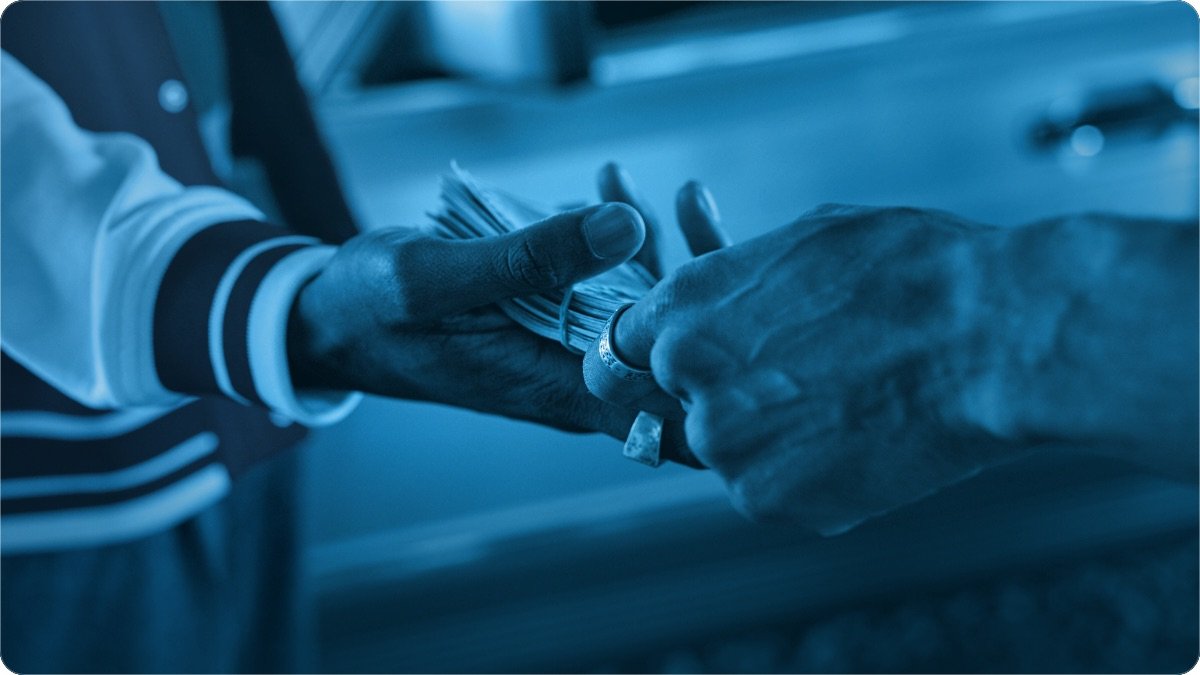
Take the money and write it against the customer whose khata it clears, never against the man who handed it over. Note the payer's name beside the entry, say the remaining balance out loud, and give a receipt carrying both names. The debt stays with whoever took the goods.
The father who arrives with an envelope
A man you have never dealt with walks in on a quiet morning and says he has come about his son's account. He puts down an amount and asks you to clear what you can with it.
Almost every shopkeeper's first feeling is relief. Money you had half given up on is standing on the counter, and the person offering it is calm and polite. You take it, you write something, and the morning moves on.
That is usually the right instinct and it is usually fine. But this one small event has more ways of going wrong than it looks, because for the next few months there will be three people carrying a version of it in their heads: you, the man who paid, and the customer who was not there.
It happens in every credit shop. A father clearing a son's page. A brother settling for a brother who has gone away to work. An employer paying off what his worker owes and taking it out of his wages. A wife bringing money for a husband's balance. Each of those is a slightly different situation and all of them are handled the same way at the counter, which is the good news.
Whose payment is it, really?
The confusion in this situation is not about the notes. It is about the page.
A khata records what one person owes. When a second person pays part of it, nothing about the debt changes hands: the man who took the goods still owes the shop, and now owes less. The payer has not bought anything, has not opened anything, and does not become your customer.
That sounds obvious written down, and it gets muddled at the counter constantly, because a shopkeeper naturally writes down the name of the person standing in front of him. A payment written under the payer's name creates a second page for somebody who never took goods, and leaves the customer's balance untouched. Now you have two wrong records instead of one right one.
There is a second confusion worth naming. Accepting a payment from a relative does not make that relative responsible for the rest. He paid Rs 18,000 today; he has not agreed to pay the remaining seven thousand, and treating him as if he has is how a helpful man decides never to come back. If you want somebody actually responsible for a balance, that is a guarantor and it is a separate agreement made in advance, which is the subject of when to ask for a guarantor.
Say his brother pays Rs 18,000 of a Rs 25,000 page
Say his brother pays Rs 18,000 of a Rs 25,000 page
The brother never gets a page of his own. He is a note beside a payment, not a second customer.
The single most important line in that table is the fourth one, the note beside the entry. It costs three words and it answers every question that can arrive later.
Three months on, the customer may ask why his balance dropped in a month he did not pay. The brother may ask what happened to his money. A helper reading the page may wonder whose payment that was. All three questions are answered by "paid by his brother Salman" sitting quietly beside the amount, and none of them are answerable without it.
The other line worth attention is the last. Rs 7,000 still stands against the customer, and the payer must hear that number before he leaves. If he walks out believing he cleared the whole thing, then in three months you will have a conversation in which he is convinced he settled his brother's account and you are asking for more, and he will be sure you are wrong. That conversation is entirely avoidable and it is avoided with one sentence at the counter.
Start your digital khata today
Free to start. Works offline. English, Roman Urdu & Hinglish. Your customers get their app free, forever.
What to write, and against whose name
Six steps while he is still standing there
- 1Ask which name the money is for, before you touch it"This is for Adnan's khata, yes?" One sentence removes half the risk.
- 2Count it aloud and say the figure back to himWhat he hears is what goes in the book and on the receipt.
- 3Write it against the customer's name, not the payer'sThe debt belongs to whoever took the goods. That never changes.
- 4Note the payer's name beside the entry, in three words"Paid by his brother Salman." That note answers every later question.
- 5Say the remaining balance out loud before he leavesSo the payer cannot later believe he cleared the whole thing.
- 6Give a receipt with both names on itThe customer's name as the khata, the payer's name as who handed it over.
The first step is the one shopkeepers skip most often, and it is worth doing even when it feels unnecessary.
Ask which name the money is for before you take it. In a shop with two customers of the same name, or a family where a father and a son both have pages, this single question prevents an error that is very hard to unwind later. The reason it feels unnecessary is that you usually already know. Ask anyway; it takes two seconds and it makes the payer state it himself, which matters if he ever remembers it differently.
The step people underestimate is the fifth. Saying the remaining balance out loud is not about the customer at all. It is about the payer, who is the person most likely to walk away with a wrong belief, because he did not see the page and has only the amount he handed over to go on.
If you keep the khata on paper, all of this fits in one line: the amount, the date, and "paid by his brother". If you keep it in an app it is the same discipline in a different place. In Wasoolo a payment carries a note of its own, so the payer's name travels with the entry and shows up in the statement you send later, which means the answer is already written the day somebody asks.
The receipt matters more than usual here
A receipt is good practice on any payment. On this one it is close to essential, and for a reason that has nothing to do with you.
The payer is going to go home and tell the customer he has paid. The customer, who has not seen your book, has only his relative's word for what happened. If there is any friction in that family, and there often is when one person is paying another's debts, the amount can grow or shrink in the telling.
A receipt with both names on it ends that. The customer sees exactly what was paid and exactly what remains, and any disagreement is between the two of them rather than between either of them and your shop. It costs you a slip of paper and it takes your name completely out of a family argument, which is worth more than the paper.
Give it even when nobody asks. Especially when nobody asks, because the people who do not ask are the ones who will remember it differently. This is the same protection described in ending an argument about what was already paid, applied before the argument exists.
The four ways this goes wrong later
How the same payment ends two different ways
Done at the counter
- Both names on one entry, so nothing is ambiguous
- The customer told the same evening that it was paid
- The remaining balance said aloud to the payer
- A receipt handed over even when nobody asks
Left for later
- The payment written under the payer's name by mistake
- The customer hears about it from his brother, not from you
- The payer assuming the page is now completely clear
- Two versions of the same afternoon, three months later
The right-hand column is what happens when the payment is treated as an ordinary event and written up in the evening, and each of those four is common.
The second one deserves a mention on its own. Telling the customer yourself, the same day, seems unnecessary because his own brother will tell him. But you are the only one of the three people involved with a written record, and a short message saying his balance is now Rs 7,000 costs nothing and makes you the source of the fact rather than a party to the dispute.
It also does something useful for the balance itself. A customer who learns from you that somebody has settled most of his page is a customer who has just been reminded, gently and without any pressure, that the rest is still there. That is a better recovery move than most reminders, and it arrives at a moment when he is likely to feel he should act, which is the whole art described in recovering udhaar without losing the customer.
When to refuse the money
Take the money, unless one of these is true
- The payer wants the customer never to be told
- He wants the goods handed to him instead of a receipt
- He is settling a page that is under a real dispute
- He expects the credit to continue in his own name after
- He is paying to make you drop a guarantor's name
- You cannot tell whose money it is and he will not say
Almost all of these are rare, and the ordinary answer to a relative with an envelope is yes, take it, write it properly, and be glad.
Two on that list deserve a word. The first is a payer who wants the customer never to be told. That is a request to keep a record you both know is incomplete, and it always ends with you in the middle of something you did not create. You can accept the money while declining the secrecy: "I will take it, and it will show on his page, because that is how the book works."
The second is a payer who expects to inherit the credit line. He clears his brother's balance and then wants goods on credit himself, on the strength of what he just did. Paying somebody else's debt is a good sign about a person, and it is not the same thing as a credit history with your shop. Treat him as a new customer with a new limit, decided the way you would decide any other, which is the whole of how much udhaar to give and to whom.
And if the payment is coming because the family has decided to run one page instead of several, that is a bigger decision worth making deliberately rather than by accident, and both sides of it are set out in one khata for the house or one per person. Paying from family money is normal in most shops, and the boundaries that keep it comfortable are in udhaar for family and friends.
Start your digital khata today
Free to start. Works offline. English, Roman Urdu & Hinglish. Your customers get their app free, forever.
The payer wants the receipt in his own name. Is that all right?
Put both names on it: the khata it was paid against, and the person who handed it over. A receipt naming only him suggests he had an account, and he does not.
My customer says he never asked his brother to pay. What now?
The money still reduces what he owes you, and that is the end of your part. Anything else is between the two of them, and you should say so plainly and kindly.
Can I refuse and tell him to send the customer himself?
You can, but you rarely should. Money that clears a balance is worth taking, and refusing it usually means it goes to whoever is willing to accept it.
An employer pays what his worker owes me. Does anything change?
Only that it may repeat. If it becomes regular, ask the employer to tell you before each payment, so a month with no payment is not mistaken for one with.
Should I let the payer see the whole khata?
No, unless the customer has said he may. What was bought and when is the customer's business. The amount being paid and the balance remaining is enough.
What if I am not sure the money is honestly his to give?
Then ask a plain question and listen to the answer. If it is still unclear, taking a payment on an ordinary household balance is fine; anything unusual is worth waiting a day for the customer himself.