
MoneyCustomers
Taking on the customers of a shop that closed
A shop near you shut and its buyers are at your counter asking for udhaar. How to read the closure, sort the arrivals, and grow without draining your cash.
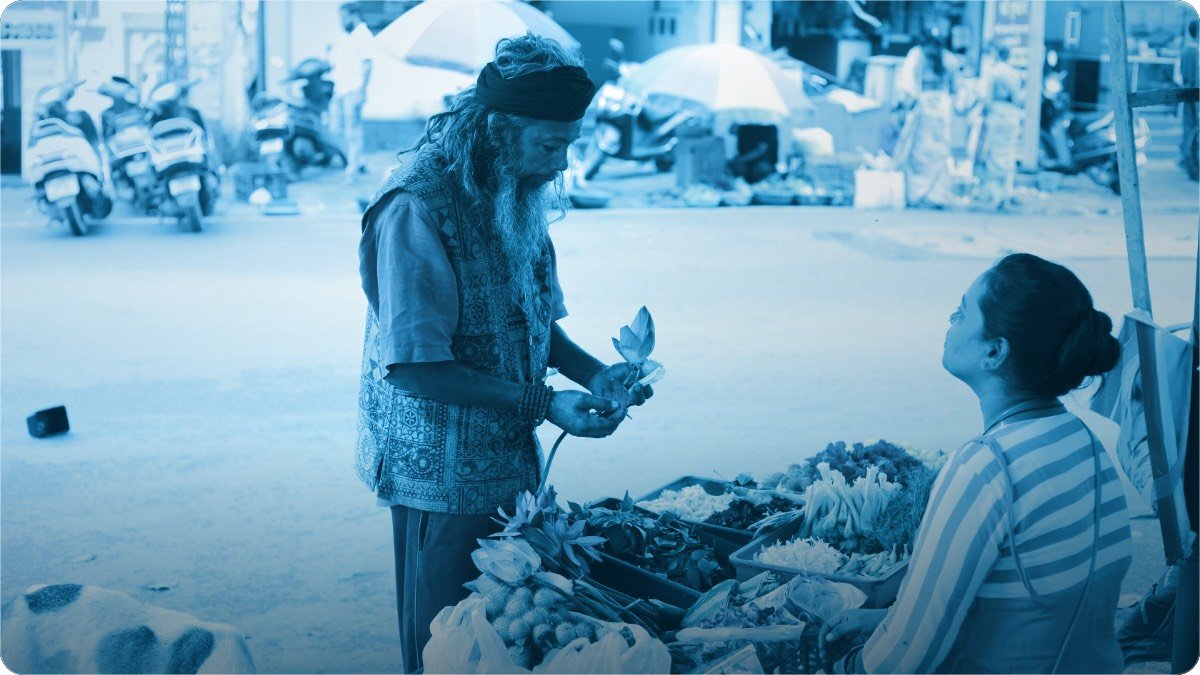
The shop across the road has closed and its customers are walking into yours. Take every cash buyer today. Give credit to nobody in the first weeks. Find out why that shop shut, because a large part of the reason is now standing at your counter asking for a khata.
The week after the shutter comes down
On Tuesday the shutter is halfway down and a rented pickup is being loaded with shelving. By Thursday the board is gone. On Saturday a woman you have seen a hundred times in the street but never at your counter buys oil, sugar and tea, and asks if you keep flour in large bags.
That is the good version, and it runs for a week. Six new faces, then nine, then a dozen. Things that used to last three days are gone by evening.
Then the other kind arrives. A man in his forties, polite, in no hurry. He buys a small item, puts a note on the counter and says: "I always had a khata at the other shop. He kept it in a register. Can you open one for me the same way?"
Nothing about him is alarming. He is not asking for much. And that exact moment, repeated eight or nine times over a fortnight, is how a steady shop with no problem at all buries itself in three months.
Growth that arrives in one week is a cash problem
A shop is built around one quiet number: how much sells in a normal week. Everything else is sized for it. Shelf space. Order size. The cash kept back to pay for goods. The udhaar, meaning the credit you give, that you can carry without it hurting.
When a shop near you closes, that one number jumps and the rest do not follow on their own. They have to be dragged up behind it out of your own pocket.
Say your sales jump by a third in one week
An example, not a real shop. Put your own weekly figures in and the shape stays the same.
Sales up by nearly a third, and less cash in hand at month end than at the start. That is not a disaster, and every growing shop passes through it. It turns into one only when the credit line in that box is the biggest, because stock becomes cash again in a few weeks and credit given to a stranger may never become anything.
Read the closure before you read the customer
The most valuable thing you can do in the first week is find out why that shop actually closed. Almost nobody does it.
Some reasons carry no warning. The owner got old and his sons work elsewhere. He was ill. The rent went past what a small shop can pay. The family moved to another city. In those, the customers are just customers and you have been handed free growth.
Other reasons are a message written to you. He was buried in credit and could not pay his suppliers. A run of his regular buyers stopped paying and he ran out of money to put goods back on the shelf. He kept no record worth the name and could not say who owed him what.
If that is what happened, part of the reason his shop closed is now at your counter asking politely for the same arrangement. The goods he was never paid for are gone. The habit that produced them is not, and it is looking for a new home.
You will not get this from gossip. You get it from one man, and you go to him.
Three kinds of people walk in, and they are not the same
Sort the arrivals before you do anything else.
The first group pays cash. They buy, they pay, they leave. Take every one of them today and go out of your way for them. Learn a few names. Keep the thing they always ask for in stock. This group is the whole prize, and it needs nothing except a shop that has what they came for.
The second group is the people the closed shopkeeper will vouch for by name. He watched their money habits for years the way you watch your own regulars. His word is not a guarantee, but it beats a friendly face.
The third group asks for credit before it has ever bought from you once. That group decides how this ends.
The first four weeks, in this order
- 1Week one: sell to everybody, on cash onlyServe fast, learn faces, learn what they ask for. Not one new credit page opens this week.
- 2Week two: sit with the shopkeeper who closedOne quiet visit, questions ready, respect first. He knows those households better than you ever will.
- 3Week three: count what actually moved, then orderOrder against three weeks of real selling, never against the excitement of the first two.
- 4Week four: open the first few small khatasOnly for people who have paid you in cash several times, at a limit you can lose without pain.
No udhaar in the first weeks, however the request is dressed up
Nobody gets a credit page in your khata in the first weeks. Not the polite man. Not the schoolteacher. Not the one who says the old shopkeeper will confirm it. Not your neighbour's cousin.
This is not suspicion. Credit goes to a payment habit you have watched with your own eyes, never to one somebody else described to you. You have no history with these people yet. In four weeks you will.
Four in the afternoon, a man comes in for cooking oil and says: "Put it on my account, I'll settle at month end like I always did." Here is the answer that keeps him:
"I'm glad you came. I don't open a credit page for anyone in the first weeks. That is my shop's rule and it is the same for everybody. Buy on cash for a few weeks, we'll get to know each other, then we'll open your page properly. Today the oil is at my regular customer's rate."
Say it once, plainly, then move to the next customer. Do not apologise and do not explain it three times.
Refusing credit on day one without losing the buyer
What keeps him coming back
- One rule said out loud: credit starts after a customer is known here
- The same answer for the schoolteacher and for your neighbour's son
- A clear date instead of a vague no: come to me after four weeks
- A better rate or free delivery today, so the visit is still worth it
What costs you either the money or the man
- Yes to the first one because he looked respectable
- A small amount now, to be settled with the closed shop's balance
- No rule at all, just your mood at that moment
- A yes on the promise that the old shopkeeper will vouch later
Some will leave. Let them. A buyer who walks out because he could not get credit on his first visit told you what kind of customer he meant to be, and he told you before it cost anything. How much udhaar to give and who should get it is that decision in full.
Talk to the man who closed
Go and see him. Bring nothing, ask for nothing at the start, and do not turn up while he is still carrying furniture out.
He is the best source of information you will ever get about thirty or forty households, and he has no reason left to lie. He is not competing with you any more, and a man who has just closed a shop usually wants to talk about it.
Six things to ask the shopkeeper who closed
- Which households paid you in cash, every time, without being asked
- Which names still owe you money, and for how long
- Was anybody paying you only half, month after month
- What did the street buy that you always ran out of
- Which goods sat on your shelf and never sold
- If you were opening again, what would you refuse to do
Now the hard part, and it is hard because he is a decent man having a bad time. He may ask for help recovering his outstanding money. He may suggest something that sounds generous: his old customers settle at your counter, you pass him the money, everybody keeps a relationship. Or he may offer you his whole book of debts at a discount, as if it were stock.
The answer to all of it is no, and it should be a warm no.
Never take another shop's credit onto your books as money owed to you. You did not sell those goods, you do not know what was agreed, and you cannot prove a line of it if the customer argues. Never let a customer settle an old debt through you either. The day he hands you Rs 3,000 and says Rs 1,000 of it was for the old shop, you are in a fight you cannot win. And never buy a book of debts at a discount. That is not a dukandar's business: the easy balances are already paid, and what is left defeated a man who knew those families for years.
What you can do costs nothing. If a customer mentions the old shop, say plainly: "That is between you and him. Go and settle it. He was good to this street." Taking that risk onto your counter is not help. It is a slower way of closing two shops instead of one.
Buy stock for the demand you can prove
The second trap is the shelf, and it is quieter than the credit one.
After two heavy weeks it feels obvious to call your supplier and double the order. Not yet. Some of what you see is real demand that has moved to you for good. Some is curiosity, and some is people trying every shop before they settle on one. Nobody can tell those apart in a fortnight.
Hold for two or three weeks. Run out of things and apologise for it. That costs far less than a shelf full of goods nobody comes back for. Write down what you ran out of. By the third week you can see which lines went up and stayed up, and only those get your cash.
Then increase in one step, on those lines only, and keep it smaller than the sales suggest. Bulk is cheaper per unit and everybody knows it, which is exactly why so much money dies on shelves. Buying in bulk or little and often lays out both sides.
Start your digital khata today
Free to start. Works offline. English, Roman Urdu & Hinglish. Your customers get their app free, forever.
Who becomes a khata customer, and when
After four or five weeks you know things. Who comes back. Who pays without being reminded. Who buys steadily instead of once in a rush.
Open the first pages for that group, the way you would for anybody else in your shop. A small starting limit, low enough that if it vanishes you are annoyed rather than hurt. A clear settlement day, said out loud and written down. The limit rises later because he paid on time three times, not because he asked.
For a larger amount from someone whose family you do not know, the rule you already use applies, and when to ask for a guarantor is worth reading before you fix the number, not after.
One more thing. They are used to a shop that knew them, and that shop is gone. What holds them is not credit, it is being recognised: the item kept aside because you knew he takes it, the correct rate without being asked. Keeping regular customers costs less than credit and holds harder.
Names written in a rush become arguments later
Nine new names in a fortnight is exactly when the writing slips. Two of them are called Iqbal. One is "the tall man from the lane behind the mosque". One has no phone number because he was in a hurry. Three months later you are looking at Rs 4,200 against a page that says "Iqbal", and you do not know which one it is.
So take fifteen seconds while the person is in front of you. Full name. Phone number, dialled once so you know it rings. One word about where he lives. Do it at the counter, not in the evening from memory, because by evening two of the nine have become one in your head.
This is where a phone beats a register. In Wasoolo each customer is a separate page with a name and a number attached, so two men called Iqbal cannot quietly become one line. What he took, what he paid, what is left, from his first day.
The shop across the road closing is a real opportunity, and it does not come often. It turns into a loss only when you take on the customers and the reason for the closure at the same time.
A customer says the old shopkeeper will confirm he always paid on time. Is that enough?
Treat it as information, not a decision. Ask the shopkeeper yourself instead of trusting the customer's account of it, and still start small after a few weeks of cash buying.
The closed shopkeeper is offering me his outstanding money at a discount. Is that ever worth it?
No. Collecting a debt you did not create, on terms you did not set, with no proof of what was agreed, is not shop work. The easy balances are already paid.
My sales have jumped. Should I put on a helper straight away?
Wait until the higher sales hold for a month. A helper is a fixed monthly cost; a curiosity spike is not.
Some new buyers want me to match the closed shop's rates. What do I say?
Tell them your rate and what they get for it. A shop that closed is not a price worth copying, and cutting once sets a rate you are held to.
Should I tell the new customers I know their old shop is closed?
Say nothing beyond a kind word if it comes up. Speaking badly of a closed shop in front of its old customers tells them how you will speak about them.
How long before I treat these people as regulars rather than as new names?
Four to six weeks of steady cash buying is a fair line. The test is not time alone, it is whether they came back on their own without a reason to.