
ProblemUdhaar
How to plan a collection round that brings money back
You shut the shop, walk for three hours and come back with two payments. Here is how to build the list, pick the day, plan the route and collect more.
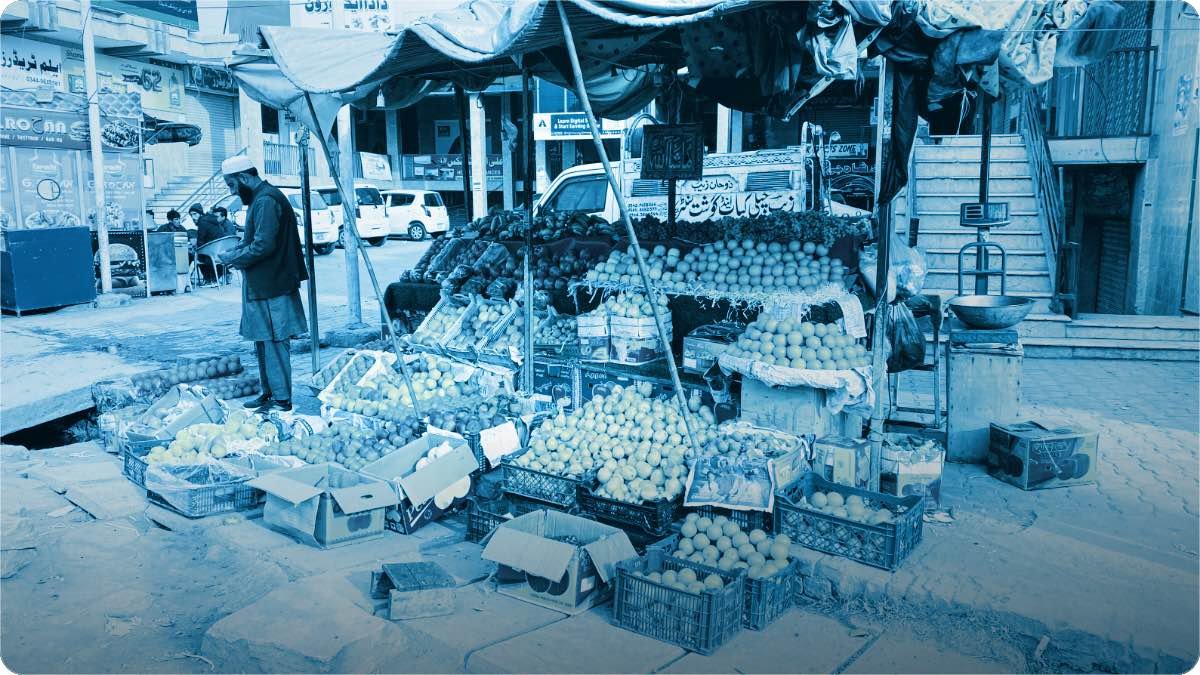
Plan it like a job. Before you lock the shutter, build a list of every open balance with its size, its age and the date of the last payment. Order it by who can pay today, group it by street, go at the hour a man is home, and write each payment down at his door.
The half day that came back with two payments
It is two o'clock. Sales are slow, and there is Rs 70,000 sitting on your khata that you have not seen for months. You pull the shutter down and walk.
Three hours later you are back. Four houses were locked. Two men said come tomorrow. One paid Rs 2,000 against Rs 9,000 and looked annoyed doing it. One cleared his balance because he happened to be sitting outside his gate. You have Rs 4,200, sore feet, and a shop that was shut through the hour when the factory shift ends and people buy.
Now count what the walk cost. If your counter turns over Rs 800 in an hour, three hours away is Rs 2,400 of selling gone, to bring back Rs 4,200. It barely paid for itself, and after an afternoon like that you will not want another round for a month.
The walking was not the problem. Walking out with nothing planned was. No list, no order, no idea who had cash in his pocket. Done that way a round is a gamble. Planned for one hour before you leave, it is a job, and it pays like one.
The list you build before you lock the shutter
Open your book at the counter and write four things beside every name you mean to visit. What he owes. How old the oldest unpaid part of it is. When he last paid you anything. And what work he does.
Those four facts are the whole plan. The size tells you what the visit is worth. The age tells you how hard the money has become. The date of the last payment tells you whether he is still paying at all: somebody who gave you Rs 1,500 twenty days ago is a different customer from somebody who last paid seven months ago, even if both owe Rs 8,000. His work tells you which day he holds cash.
Building the round before you lock the shutter
- 1Write down every open balanceThe name, the exact amount, and how old the oldest unpaid part of it is.
- 2Add the date of the last paymentSomebody who paid you twenty days ago is worth a knock. Somebody who last paid seven months ago needs a plan, not a knock.
- 3Mark the day each man holds cashWage day, market day, delivery day. Ask once at the counter and write it beside the name for good.
- 4Cross out the ones you should not visitThe ones a short message settles, and the ones a visit will only harden.
- 5Sort what is left by streetOne street per round. Small, recent balances first; the big name last, when you have time to sit.
- 6Carry the last three entries for every nameThe exact balance and the entries behind it. That is what stops an argument at the door.
Write the round on one page, with an empty column on the right for what you collect. You want to see the whole afternoon at once, and to be able to hand the page to your helper.
Sort by who can pay today, not by who owes the most
The natural order is biggest balance first. It is also the order that wastes your afternoon.
The man with Rs 40,000 against his name is the reason you went out at all. He is usually also the man with nothing in his pocket. A balance gets that big precisely because he cannot clear it in one payment, and twenty minutes outside his gate does not create money that is not there. You come away with a promise you already had.
Four men who owe Rs 3,000 each are a different matter. Small balances belong to people who pay small amounts often, and Rs 3,000 comes out of ordinary earnings without anybody arranging anything. Four of those doors put more in your pocket than the big one ever will in one visit.
Say you plan a round of eight names on one street
So put the big names at the end, not the start. A big balance needs a sitting-down conversation about a plan and a first payment, and that goes badly when you are tired and watching the light go.
The right day and the right hour
Money is in a man's hand on particular days, and every trade has its own.
A mill worker holds it the evening he is paid and a day or two after, so you go the morning after his wage day. A vegetable seller holds it the day after the market day. A tailor holds it when the order is delivered, not while he is stitching. A driver holds a little every night. A schoolteacher holds it in the first days of the month.
Learn each customer's day once and write it beside his name. It takes one question at the counter: "Which day of the month suits you best?" Nobody minds being asked, and you never guess again. That habit turns a random walk into the rhythm described in collecting weekly or waiting for month end.
The hour matters as much as the day. Turn up at one in the afternoon and his wife opens the door and says he is out. Turn up while the family is eating and you become a guest who has to be fed, and nobody talks about money over food. Just after dark, or an hour before the shops open, a man is home, awake, and not surrounded by people.
Start your digital khata today
Free to start. Works offline. English, Roman Urdu & Hinglish. Your customers get their app free, forever.
One street at a time, and what goes in the bag
Now draw the list as a map. Eleven names spread across the bazaar is not a round, it is an afternoon of walking. The same eleven sorted by street is two hours.
Take one street per round and finish it. If a name sits far from everybody else, leave it for the day you are going that side for stock anyway. Crossing the bazaar four times is how three hours disappear, and the shop time it costs is the real price of the round, the same arithmetic as leaving the shop for a longer stretch.
What goes in the bag, and what stays behind
Take it with you
- The one-page list: name, exact balance, last three entries.
- A receipt book, so every payment is proved at the door.
- Change, down to the small notes.
- The day and hour each man was found at home last time.
Leave it at the shop
- A rough figure you plan to correct later.
- Names picked from four different streets.
- Anger left over from the man who refused last time.
- A plan to write the whole round up at night.
What you carry decides how the conversations go. For every name you need the exact balance and the last three entries behind it, because the first thing a man says at his own door is "how much?" and the second is "for what?" A rough number and a shrug turns a two-minute collection into an argument.
Carry a way to give a receipt on the spot, even a small book with carbon paper. And carry change: a man holding Rs 5,000 against a balance of Rs 4,300 hands you nothing if neither of you can settle the difference.
What you say at the door
Greet the family first and the money second. You are standing where his children and his neighbours can hear, and his name in that street is worth more to him than your Rs 6,000.
The first ask is short, and it is not a demand. "I was passing this side, so I brought your account. It is Rs 6,400. Can you manage something today?" Say the number, then stop talking. Silence does more work than pressure, and most people fill it with a real answer.
The second ask, on the next round, uses the record. "You gave Rs 2,000 the last time, so it is Rs 4,400 now. Shall we finish it?" You are showing him progress he made himself, which is easier to agree with than a lecture.
The third ask changes shape. If two visits have produced nothing, stop asking for the full amount and ask for a plan: a fixed sum on a fixed date, written in front of him, with a smaller payment today to start it. The full method is worked through in recovering udhaar without losing the customer.
Write it there, before you walk on
Enter the payment at his door, in front of him, before you take a step towards the next house. Not at night, not from memory.
By ten at night you have visited nine people and three of them have blurred together. The entry written from memory is the entry disputed six months later, and you will have no answer. Read the amount back, hand over the receipt, let him see it written.
Decide too who is not on the list. Somebody who always pays when you send a short message does not need a visit, and turning up at his gate will insult him. Somebody promising and never paying for months only hardens if you appear a fourth time, and a very old balance is a different job, handled the way a year-old udhaar needs handling.
Then the names you did not reach. Mark each with what happened and carry the page into the next round, so it starts where this one stopped. A name unreachable across three rounds is a customer going missing, and that needs the guarantor and the neighbours rather than another walk.
Whatever you carry the list on, it must hold every name's balance, last three entries and last payment date before you leave. In Wasoolo that list is already there, sorted by what is owed and how long it has been sitting, and a payment can be entered and a receipt sent from the customer's page while you stand at his door.
Start your digital khata today
Free to start. Works offline. English, Roman Urdu & Hinglish. Your customers get their app free, forever.
Common questions
How many names should one round have?
Eight to twelve, on one street, is a round you can finish in two hours. More than that and you are still walking after dark, tired, taking whatever people offer instead of asking properly. A short round you complete beats a long one you abandon, because the abandoned half always holds the names you were dreading.
Is it better to send my helper instead of going myself?
For small, regular balances a helper is fine, so long as he carries the exact figures and a receipt book and enters every payment on the spot. For a big balance, an old one, or anybody you must agree a plan with, go yourself. Those talks need somebody who can say yes to an offer.
What if a customer gets angry that I came to his house?
Apologise for the timing, not for the money, and never argue at the door. Say you were passing and will come another day, then leave. Ask him at the shop which day and place suit him better. Almost all of that anger is about being asked in front of family.
Should I tell people in advance that I am coming?
Yes for the big balances, because a man who knows you are coming can keep the money aside, and one who does not will genuinely be short. For small balances a warning just gives an avoider a reason to be out. A short message the evening before is enough.
How often should a round happen?
Once a week or once a fortnight, on the same day, so it becomes a known thing rather than an event. Customers start to expect you and keep something ready, and balances never get old enough to frighten anybody. Rounds that happen only when you are desperate arrive too late.
What if the round brings back less than the selling I lost?
Then the list was built wrong, not the idea. Check three things: were the names sorted by who could pay, were they on one street, and did you go on a day money was in their hands? If all three were right and the collection was still small, your balances have aged past what a visit can fix.