
CompareStock
Stock the cheap version or the good one?
The cheaper packet pays you Rs 15 more a piece and sits for four months. Here is the number that really settles it, and the mix most small shops need.
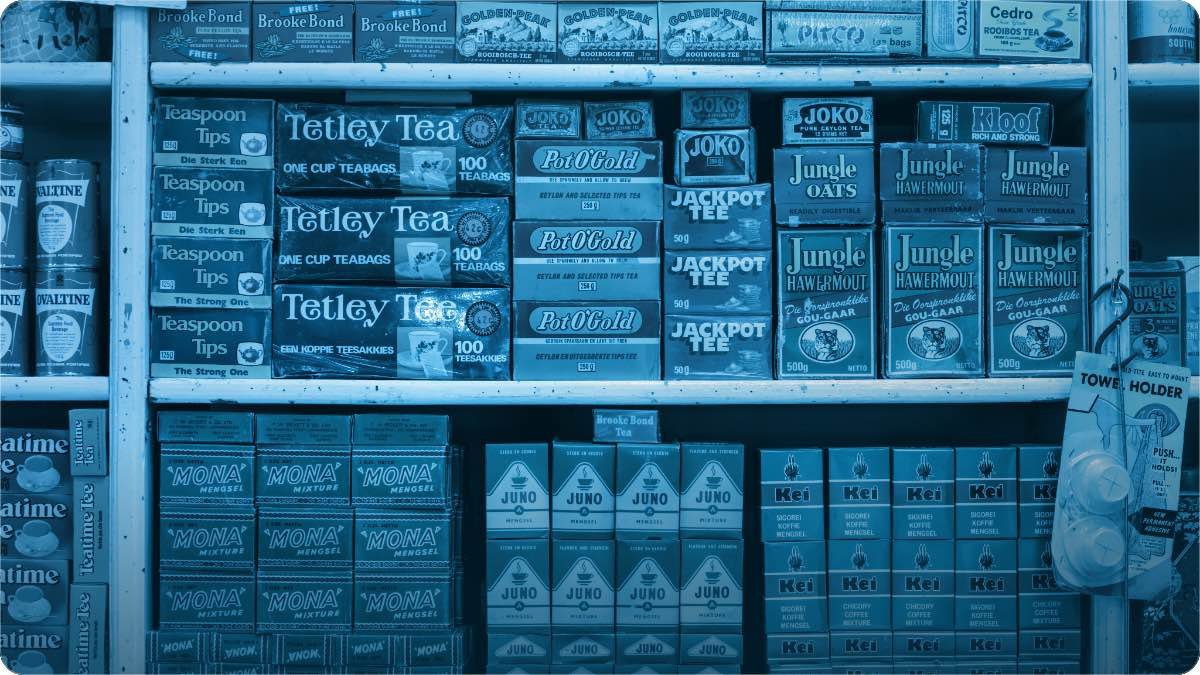
Carry both, and set the ratio on purpose. Let the known brand anchor the shelf so people trust the shop, and keep the cheaper packet as the choice you offer rather than the one you push. Judge every line by margin multiplied by how often it turns, never by margin on its own.
The salesman puts two packets on your counter
Half past eleven in the morning. The van has stopped outside, the salesman has his bag open on your counter, and he sets down two packets of the same thing. One is the brand every customer in your street can name. It costs you Rs 170 and you sell it at Rs 200. The other carries a name you have never seen. It costs you Rs 75 and he says you can sell it at Rs 120.
He does the arithmetic out loud, because he has done it a hundred times before lunch. Rs 30 on one. Rs 45 on the other. Fifteen rupees more in your pocket on every single piece. Then he stops talking and waits, which is the part of his job he does best.
The decision takes forty seconds and lasts twelve months. Say yes once and a carton arrives. Say yes twice and the cheap line has taken the eye-level space the known brand used to own, and the customer who came in for the known brand finds a stranger sitting where it was.
Neither packet is wrong. What is wrong is deciding on the only number the salesman put in front of you.
Margin per piece is the wrong number to decide on
Rs 15 a piece is a real gain. It is simply not a complete one, because it says nothing about how many pieces.
Money in a shop is not a stack. It is a wheel. The same Rs 6,000 gets spent, sold, collected and spent again, and every time it goes round it earns you a margin. So the number that settles a choice between two packets is not the margin. It is the margin multiplied by how many times a year that money goes round.
A fat margin that sits for four months turns three times a year. A thinner margin that clears every three weeks turns about seventeen. That gap is wide enough to swallow the Rs 15 whole.
Say you put Rs 6,000 of shelf money behind one packet or the other
Made-up figures, chosen to show the shape. Run your own two packets through the same four lines and the answer is usually obvious.
Read the last two lines twice. The packet that pays you more per piece pays you far less per year, out of exactly the same money. And that sum is generous to the cheaper packet, because it assumes every piece eventually sells. Often it does not. The last fifteen sit until the packaging looks tired and you let them go at cost, which turns a wide margin into no margin at all.
This is the arithmetic underneath how to price what you sell and still earn. A rate is only half a price. The other half is speed, and speed is the half nobody writes down.
The two packets, row by row
Put the two packets side by side on more than price and the picture changes.
The same item, two packets, seven rows that actually differ
Only one row favours the cheaper packet outright, and it is the row the salesman read out.
The row about money tied up is the honest argument for the cheap line. Rs 6,000 buys eighty of one and thirty-five of the other. If your whole buying purse for the month is Rs 40,000, the cheaper packet lets you carry more kinds of things, and a shop that has what people ask for beats a shop with fewer, better versions of the same six items. Cheap lines are how a small purse buys range.
The last row decides your shelf plan. A packet nobody asks for by name only sells if it is seen, so it needs a wide, well-lit block to earn anything. A packet people came in wanting sells from a corner. Give the cheap line a narrow strip and it will not move, and then you will blame the product when what was poor was the position.
The two mistakes, and what each one costs
There is a mistake at each end of this, and they cost in different currencies.
The first is a bad cheap line. Not a cheaper line, a bad one. The soap that does not lather, the bulb that goes in six weeks, the packet whose contents look nothing like the picture. Here is what nobody tells you when you buy it: the complaint does not go to the company. It comes back to you.
Six in the evening, a woman you have served for years puts the bulb on your counter and says it lasted eleven days. She is not shouting. That is worse. You hand her another one, because arguing over Rs 120 with a regular customer is the most expensive argument in retail. You have lost the Rs 45 you gained plus the Rs 75 the replacement cost, so one replacement wipes out the extra margin on three pieces.
The real loss is not on that receipt. She will not take your word again. When she asks which one is good and you point to the left, she will reach to the right. That recommendation was an asset, and you spent it on Rs 15 a piece.
The second mistake is the opposite: a shelf carrying the known brand and nothing else. It looks disciplined, and it quietly sends people away.
A man walks in with Rs 150 in his pocket and needs the item today. Your shelf offers him Rs 200 and nothing else. He does not ask you to reduce the rate, so he says he will come back and walks to the corner shop with the Rs 120 packet. He also picks up the bread, the eggs and the tea he was going to buy from you, because he is already standing there with his money out. You did not lose a Rs 200 sale. You lost a basket, and probably the next one too.
One line should never be decided on price alone, whatever ratio you settle on. Anything that goes in the mouth, on the skin, or inside a machine. Food, medicine, cosmetics, engine oil, batteries, anything electrical. The failure there is not a refund, it is harm, and the person it harms bought it because you sold it. Take the thinner margin on those and sleep properly.
Start your digital khata today
Free to start. Works offline. English, Roman Urdu & Hinglish. Your customers get their app free, forever.
The udhaar angle most owners miss
Here is the part that only shows up in the khata, and takes a year to notice.
Cheaper lines are usually bought with cash. A daily-wage customer chooses the Rs 120 packet because Rs 120 is what he has, and he pays and leaves. The known brands are where the large udhaar sits, because the customers who insist on them have a monthly income, a running account with you, and a habit of settling at month end.
So the mix on your shelf quietly shapes your khata. Push the cheap line hard and your sales turn over in cash while your udhaar total shrinks, but your monthly account customers drift somewhere they can find what they want. Push the known brands only and your daily turnover falls, your udhaar climbs, and more of your money sits in other people's houses at month end.
Neither shape is wrong. What is wrong is not knowing which one you are building. Before you set the ratio, look at your own book for a month and ask a plain question: of the money still owed to you, how much of it walked out as the known brand? If most of your udhaar is tied to expensive lines, you have a cash problem waiting for you.
A cheap line sold on udhaar is the worst of both. Thin recovery odds on goods with a thin reputation, and when it disappoints you are chasing a customer for money on something he is unhappy about. Sell it on udhaar only to people whose payment habit you know.
Read your street, then set the ratio
No rule fits every shop, so stop looking for one and read the street outside your own door.
What do your customers earn, and how do they earn it? A street of daily wage earners and a street of salaried families behave completely differently on the same shelf. Do they buy the packet or the loose weight? A customer who buys rice by the kilo is already telling you that price rules. Do they ask by name, or do they ask for the item? "Give me a shampoo" and "give me that shampoo" are two different businesses. And are they buying for the house or to sell again? A small shop that buys from you to resell in a village will take the cheaper packet every time.
Then write it down, because your feeling about your customers is usually a memory of the loudest ones. For two weeks, mark on a pad whether the buyer asked by name or took what you handed him. Twenty ticks teach you more than a year of impressions.
The answer for most shops is boring, and it is right. Carry both. Make the known brand the anchor: full facings, eye level, never out of stock. It is the reason a stranger trusts you enough to buy anything else. Put the cheaper packet beside it, in less space, as the option you offer when somebody hesitates. You are not pushing it. You are answering a question the customer already asked with his face.
A starting ratio that suits a lot of small shops: about seventy of your money in that category behind the known lines, thirty behind the cheaper one. Where price rules the street, closer to fifty and fifty. Where customers are salaried and ask by name, eighty and twenty.
Then move it slowly, on evidence. If the cheaper packet clears in three weeks with no complaints, give it more room. If it takes two months, give it less. Reviewing that properly means knowing what each line actually earned you, which is the point of working out your shop's real profit instead of judging by what feels busy.
Test it for a month, then drop the loser cleanly
Two shopkeepers can argue about a cheap line for a decade. One carton and thirty days settles it.
The one-month test, before you argue about it again
- Buy a small quantity, one carton at most, never a bulk deal
- Give it one fixed shelf position and do not move it all month
- Write the date you opened the carton and the piece count in it
- Record every piece sold, and whether you had to talk the customer into it
- Record every return, complaint and free replacement, with the reason
- Note how many buyers came back for a second one
- On day thirty, count what is left and work out the real turns per year
The fixed shelf position is the part everyone skips, and it ruins the test. Move a packet three times in a month and all you have learned is that a moving target does not sell.
Recording whether you had to talk somebody into it is the most useful line on that list. A packet you had to sell will need you standing there forever. A packet somebody picked up on his own is a line with a future. Count those two separately or the total lies to you.
Count the returns with the reason beside them. Three out of forty is a line to drop no matter how wide the margin, because those three walked out believing you sold them something poor.
If it loses the test, drop it without wearing the loss, and do not let it become part of the stock that never sells and eats your cash. Run it down first: stop reordering and let the shelf empty at full rate, which usually clears half of it. Move what is left to the counter where impulse buying happens, for two weeks only. Bundle the tail with something fast, a small saving on the pair, so the slow piece leaves attached to a quick one. What survives that goes back to the salesman on his next visit, which is why who you buy from matters more than any single deal, as one supplier or several sets out. A supplier who will not take back a slow line is one whose new lines you should refuse.
One habit is worth more than all of this. Write the buy rate against every item, so the margin you compare is the real one and a rate change on a reorder cannot pass unnoticed. Wasoolo keeps a buy rate, a sell rate and the quantity you hold per item, and its profit view shows what each line actually brought in, which is how a shelf ratio gets fixed with evidence instead of opinion. A register does the same job, as long as it is written somewhere.
Start your digital khata today
Free to start. Works offline. English, Roman Urdu & Hinglish. Your customers get their app free, forever.
Common questions
The cheap packet has a much better margin. Why is that not enough?
Because margin is per piece and your money is not. The same Rs 6,000 can earn a small margin seventeen times a year or a large one three times, and seventeen small wins beat three large ones. Multiply the margin by how many times that line clears before you compare anything.
How do I judge an unknown brand before I have sold any of it?
Buy one carton, never a bulk deal, and treat the first month as a test rather than a purchase. Ask the salesman who else in the area stocks it, then go and look at their shelf, because a dusty display two streets away tells you everything.
A customer complains about a cheap item. Should I replace it free?
For a regular customer, yes, and quickly, because the argument costs more than the item every time. Take it back, hand him another one or his money, and note the return with the reason. Then take those notes to the salesman and ask him to carry the loss, which a serious supplier will.
Should I stock the cheap version of food and medicine too?
No. Anything that goes in the mouth, on the skin, or inside a machine should not be chosen on price alone. A failure there is not a refund, it is harm to somebody who bought it because you sold it. Keep the cheap experiments to buckets, brushes and stationery.
My customers only want the known brand. Should I bother with a cheap line?
Keep a thin one anyway, because the customer with less money in his pocket does not announce that he is leaving. He simply leaves, and takes the rest of his basket with him. One or two facings is enough, positioned as the second option. If it has not moved in three months, stop.
How much of my money should sit in cheap lines overall?
Start near thirty in every hundred of what that category costs you, then let the shelf record decide the rest. Where price rules the street, half and half often works. Where customers ask by name, closer to twenty. Reviewing the number matters far more than the number itself.