
MoneyStock
The supplier who wants cash before unloading
Advance terms are a price, not a punishment. Find out why he changed them, ask for the cash rate that should come with it, and reshape your orders around it.
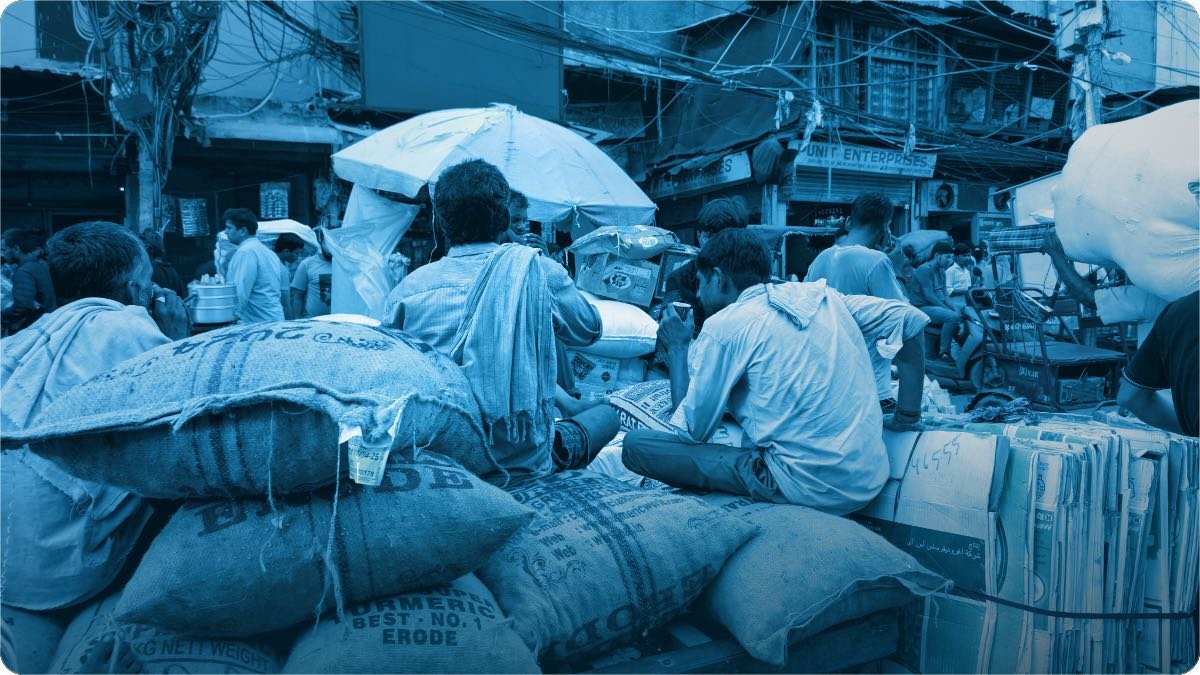
Ask for the discount that should come with paying first, because money in his hand today is worth something and he knows it. Then order smaller and more often so the cash you must find at the door is smaller each time. Advance terms are not a punishment; they are a price, and a price can be negotiated.
The van at your door and the cash you do not have
The delivery arrives on a Tuesday morning and the driver does not open the back. He says the office has told him to collect first this time.
You have been buying from that company for two years. Nothing has gone wrong, nothing was said the last time, and there are four customers in your shop watching this happen.
The bill is Rs 46,000. Your drawer has Rs 19,000 in it because half of what you sold in the past week went out on credit and has not come back yet.
That is the real problem, and it is not really about the supplier. It is that a shop selling on credit and buying on advance is being asked to fund both ends of the same trade at once.
Why he suddenly wants the money first
Before you decide anything, work out which of the reasons it is, because they lead to completely different answers.
Most often his own cash is tight. Somebody upstream has squeezed him, or too many of his shops are slow to pay, and he has tightened terms across everybody rather than singling you out. Ask him directly and you will usually be told.
Sometimes it is about you specifically. You paid late twice, or your balance with him crept up, and this is his polite way of resetting it. If that is the reason, it is worth knowing exactly, because it is fixable and the fix is entirely in your hands.
Occasionally it is a new man or a new policy, applied to everybody with no thought about who has been buying for two years. That one is worth pushing back on politely, because policies applied by accident get changed by a phone call.
And sometimes it is simply that you are a small buyer and his credit is going to bigger ones. That is not personal either, and the answer to it is size, not argument, which is part of what makes choosing between one supplier and several an actual strategy rather than a habit.
What advance-only does to your cash
The reason this hurts is not the amount. It is the timing, and the timing is worth putting on paper once.
Say you buy Rs 46,000 of stock a month
Buying on credit gives you a window in which the goods turn into money before the bill is due. Paying at the door removes that window completely, so the same shop, selling the same amount, suddenly needs a much larger amount of cash sitting still.
That extra cash is not profit and it never comes back to you while the arrangement lasts. It becomes permanent working capital, parked in your shop, and if you do not have it you will simply buy less, which is how a shop quietly shrinks without anybody deciding to shrink it.
So the honest first step is to know your own number: how much cash the shop needs to hold to keep buying at the door. Once you know it, the decision stops being emotional. It is the same discipline behind knowing how much your shop must sell before you earn anything.
Start your digital khata today
Free to start. Works offline. English, Roman Urdu & Hinglish. Your customers get their app free, forever.
Ask for the discount that should come with it
This is the part most shopkeepers never raise, and it is free money sitting on the table.
Cash at the door is genuinely worth more to a supplier than a promise in thirty days. He carries no risk, he waits for nothing, and his own accounts are cleaner. Any supplier who has thought about his business knows that, and many of them already have a cash rate they simply do not offer unless asked.
Ask plainly, without complaint in your voice. "If I am paying at delivery, what is your cash rate?" You are not arguing about the terms, you are pricing them, and that is a normal conversation between two businesses.
If he will not move on the rate, ask for something else that costs him less: better return terms on unsold goods, free delivery, a slightly larger free quantity on a bulk order, or first call on stock that runs short. A supplier who cannot give a discount can often give one of those, and any of them narrows the gap. Whether the resulting deal is actually better than credit is the arithmetic in supplier credit or a cash discount.
Order differently, not less
The instinct is to order less. The better move is to order the same overall and change the shape of it.
How to reshape orders when you must pay at the door
- Same monthly quantity, split into three or four deliveries
- Only the lines that actually move week to week
- Slow items dropped until the terms improve
- Delivery days spread across the month, not bunched
- One cycle's cash kept aside before the van arrives
- A second supplier kept warm, for the weeks that are tight
Smaller and more frequent is the whole answer. A Rs 46,000 order once a month needs Rs 46,000 in the drawer on one morning. The same goods as four orders of Rs 12,000 need Rs 12,000, and by the second one some of the first has already been sold.
Order what actually moves, and stop carrying slow items on advance terms. When you were buying on credit, a slow line cost you shelf space. When you are paying at the door, it costs you cash you needed for something else, which makes dead stock far more expensive than it used to be.
There is a cost to smaller orders and it is honest to admit it: you lose some bulk pricing and you spend more time ordering. That trade is usually worth it while your cash is tight, and it is the same balance weighed up in buying in bulk or a little at a time.
Earn your way back to credit terms
Advance-only should be a phase, not a permanent condition, and there are things that genuinely shorten it.
Pay at the door without complaining for a few cycles, and pay exactly what was agreed, on the day. A supplier watching a shop that pays cleanly for three months has a reason to reconsider that he did not have before.
Then ask, once, at a good moment. Not on a delivery day and not when you are short. Ask when your last order went smoothly and say something specific: "I would like to go back to fifteen days on the regular items." A small, precise request is granted far more often than a general complaint.
Show him the reason it is good for him. More credit means larger orders, and larger orders mean more of your shelf is his. Suppliers respond to that argument because it is true, and it turns the conversation from a favour into a trade.
And keep a clean record of every payment you have made him, with dates. A shopkeeper who can show six months of on-time payments in thirty seconds is a different customer from one who says he always pays on time, and the record is what makes buying stock on credit sustainable in the first place.
When advance-only is actually the better deal
It is worth saying plainly that paying first is not always the worse arrangement.
If the cash rate is genuinely lower, the arithmetic can favour paying at the door even when it is uncomfortable. Work out what the discount is worth across a month of orders before you decide you dislike it, because a few per cent on everything you buy is a large number by the end of a year.
Paying at the door also stops a supplier balance from growing quietly behind you. Shops that buy on credit from three suppliers often carry more than they realise, and a shop that pays as it buys always knows exactly where it stands.
And it changes how you buy. When the money leaves your hand at the moment the goods arrive, you order more carefully, and most shopkeepers who have been through a cash-only phase come out of it carrying less useless stock than they went in with.
None of that makes it the right arrangement while your own money is stuck in customers' khatas. But it does mean the question is worth deciding rather than resenting.
Start your digital khata today
Free to start. Works offline. English, Roman Urdu & Hinglish. Your customers get their app free, forever.
Common questions
The van is at my door and I cannot pay. What do I do right now?
Take a part of the order rather than sending the whole thing back, since a partial delivery keeps your shelves stocked and keeps the relationship intact. Pay for what you take, in front of the driver, and call the office yourself the same day instead of leaving it to him to report. What you should avoid is an angry conversation at the door in front of customers, because it changes nothing today and costs you standing with both.
Should I borrow money to keep paying at the door?
Not from anyone who charges you for it, and not to fund stock that is only turning slowly. If the shortfall is short and the goods sell fast, using your own savings for a cycle or two is reasonable. If you need outside money every single month to keep buying, the problem is not the supplier's terms but how much of your sales are sitting unpaid in customer khatas.
Can I ask my supplier to split the payment, half now and half in two weeks?
It is a very reasonable thing to ask and it is granted more often than a full return to credit, because it halves his risk instead of removing his protection. Put a specific date on the second half and pay it early the first time. Two clean split payments do more to rebuild his confidence than any promise you can make.
My supplier gave credit to the shop next door but not to me. Is that unfair?
It is probably about volume rather than character, so treat it as information instead of an insult. Find out what that shop buys in a month, and if the gap is size, the route back is either buying more of your range from him or accepting that his best terms belong to bigger buyers. Comparing yourself out loud to a neighbour rarely improves the terms and often sours the relationship.
Should I switch to a supplier who still gives credit?
Compare the whole package rather than the terms alone, because a supplier with easy credit and higher rates can be more expensive than a cash supplier with a real discount. Look at the rate, the freshness, the returns policy and how reliably he delivers. Keeping a second supplier who gives credit while your main one takes cash is often the strongest position, since it gives you somewhere to go in a tight week.
How much cash should my shop keep aside for this?
Enough to cover one full ordering cycle plus a little, so a delivery day never depends on how yesterday went. Work it out from your actual orders rather than a general rule, and build it slowly out of trading rather than borrowing it in one go. A shop that can always pay at the door is in a much stronger position to negotiate the terms it actually wants.