
CompareStock
Keep your stock at the shop or store it at home?
Storing goods at home saves rent and costs you counting, trips and sales you never made. Here is how to split it so the shop always has what people ask for.
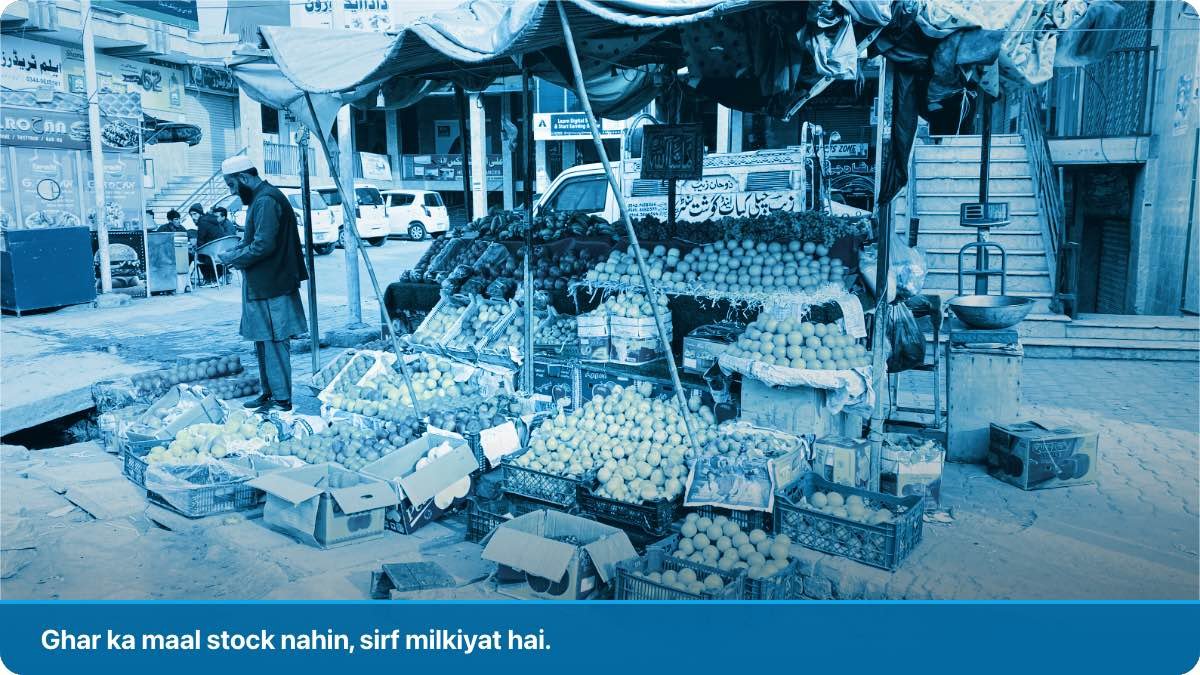
Keep a full week of anything that sells most days at the shop, and send only bulk and season stock home. Home storage is not free: it costs you counting, trips, household leakage and the sales you lose while a customer stands at the counter. Write down every carton that leaves the shop.
The room at the back of the house
Every shop runs out of room. The shelves fill, the space behind the counter fills, and eventually you are stepping over sacks to reach the till.
So the extra goes home. A store room, a spare room, the space under the stairs, the roof. It costs nothing, it is safe, and it stops the shop from looking like a warehouse.
This is one of the most common arrangements in small retail and it is often the right one. But it is treated as a free solution, and it is not free. It simply moves the cost from rent, where you can see it, to time and lost sales, where you cannot.
The question is not whether to store at home. It is what goes there, and what must never leave the shop.
Get it wrong in one direction and you are paying rent to store sacks that sit untouched for two months. Get it wrong in the other and you are running home three times a week while your shop stands with a queue in it.
The same cartons, two addresses
The same cartons, two addresses
Look at the second row, because it is the one that costs real money. Stock at home is not stock. It is goods you own, which is a different thing entirely from goods you can sell to the person standing in front of you.
A customer who asks for something you have at home is a customer you send away or make wait. Sometimes he waits. Often he goes to the next shop and you never find out, because nobody comes back to tell you they bought it elsewhere.
Look at the third row as well. Two counts in two buildings do not stay honest on their own. Goods move between them at odd moments, usually in a hurry, usually by somebody who then serves a customer and forgets. Within a couple of months neither number is trustworthy, and the only way to find out how much you own is to shut everything and count both places, which nobody wants to do.
Look at the fifth row too. Goods stored at home get used at home. A packet here, a bottle there, taken by somebody who assumes you will not mind, and nobody writes any of it down. It is not theft and it is not malicious, but over a year it is a genuine number, and it is the household version of the problem described in keeping shop money and house money apart.
What the free storage actually costs
The rent you saved is easy to see. The cost is not, so put a number on it once.
Say you send a customer away twice a week for want of stock
Made-up figures for the shape of it. If the room at home was already yours, this loss is the real rent you are paying for it.
Two lost sales a week is a conservative figure for a shop keeping its reserve at home, and most shopkeepers underestimate it badly because they never see the sale that did not happen. The customer asks, you say it will come tomorrow, he says fine, and neither of you thinks about it again.
Compare that Rs 576 a month with what you are saving. If your shop rent works out at a certain amount per square foot, and the goods at home would occupy a small corner of the shop, the saving is often less than the loss.
There is a second cost that never appears in any sum, and shopkeepers feel it more than they measure it: the trips themselves. Each one takes you off the counter at exactly the moment the shop is busy, because that is when you run out. Somebody else serves your customers while you are gone, or the shop simply waits. Over a year that is a great many hours taken out of the middle of your working day.
That does not mean home storage is wrong. It means the comparison is real, and it should be made with numbers instead of with the feeling that the shop is too full.
When the shop is the right place
Some goods should never leave the shop, whatever the space costs.
Anything that sells most days belongs on the premises with at least a full week's cover behind it. If somebody asks for it four times a week, being out of it is not an inconvenience, it is a customer walking to a competitor with a reason.
Anything a customer would not wait for. Small, cheap, easily bought elsewhere: cigarettes, a bulb, a packet of tea. The whole value of that sale is that it is available now.
Anything a customer chooses by looking at it. Goods that sell because somebody saw them on a shelf earn nothing in a room at home, and a surprising share of a small shop's sales are decided that way rather than asked for by name.
Anything sold by weight or measure out of an open sack. Splitting it between two places means you can never count it properly, and the shortages that follow are exactly the ones traced in when stock goes missing and nobody knows how.
Anything you have promised to somebody. A customer who was told his order would be ready is a customer who should not have to wait while you fetch it, and a promise kept on the spot is worth far more than the shelf space it took.
And anything expensive enough that you would want to see it every day. A carton of high-value goods in a room at home is safer than the street, but it is also out of your sight, and out of sight is where quiet losses start.
Start your digital khata today
Free to start. Works offline. English, Roman Urdu & Hinglish. Your customers get their app free, forever.
When home is the right place
Equally, some goods have no business taking up shop space at all.
Bulk buying is the clearest case. If you buy a whole case to get a better rate, the case belongs at home and the shelf carries what you can sell in a week or two. That is what makes bulk buying work, and it is the practical answer to the trade-off examined in buying stock in bulk or little and often.
Season stock is the second. Goods bought ahead of a busy stretch, in quantities you cannot possibly display, should sit at home until the shelf needs them. There is no point paying shop rent for stock that will not move for two months.
Slow-moving items that you keep for one or two customers can also go home, as long as you remember they exist. In fact, if something has been at home for a year untouched, you have not found storage for it, you have found the pile discussed in the stock that never sells and eats your cash, and it needs a decision rather than a shelf.
And anything bulky and cheap. Sacks, empty containers, packaging, crates waiting to go back to a supplier. These take up the most room and cost the least, so they are the first things to move out, and moving them often frees enough space that nothing else has to leave at all.
That last point is worth taking seriously before you move anything valuable. Walk the shop once with a hard eye and ask what is occupying space without earning any: empty cartons kept in case they are useful, an old display, three sizes of something that sells in one size. In many shops the reserve stock could have stayed exactly where it was.
How to split it without losing count
The split itself is not the hard part. Keeping both halves honest is.
How to split it, item by item
- 1Fast movers stay at the shop, alwaysAnything that sells most days should have enough on hand for a full week.
- 2Bulk and season stock goes homeSacks, cases and anything bought ahead of a busy stretch.
- 3Nothing goes home without being written downItem, quantity, date. One line at the moment it leaves the shop.
- 4Refill on a fixed day, not on demandOne trip a week beats five emergency trips a month.
- 5Count both places on the same dayTwo counts taken a fortnight apart will never agree.
The third step is the whole system, and it is the one everybody skips. A carton that leaves the shop unrecorded stops being stock and becomes a memory, and by the end of the month your shop count says one thing, your home count says another, and neither matches what you bought.
The fourth step matters more than it looks. Refilling on a fixed day, rather than every time something runs out, turns five interrupted afternoons into one planned trip. It also forces you to look at the shelf and think a week ahead, which is the habit that prevents most shortages in the first place.
And the fifth step is not optional. Two counts taken on different days can never be reconciled, because goods moved between them. Count both places on the same day, add them together, and compare the total with what you expected. The full method for counting without closing the shop is in keeping shop stock right without counting all day.
Keeping both places in one record is what makes this workable rather than exhausting. Wasoolo tracks stock quantities per item, so the number you look at is the total you actually own rather than the half you can see, and what left the shop is written the moment it leaves.
The arrangement that suits most small shops
If you want a starting point rather than a principle, this one works for a large number of shops. Treat it as something to adjust rather than obey, because the right split depends on your trade, your street and how far your house is from your counter.
Keep a week of every fast-selling item at the shop, plus a small buffer of anything a customer would not wait for. Send home only whole cases, season stock and bulky low-value goods. Refill once a week on a fixed day. Write every movement, in both directions, on one line.
Give the arrangement one more rule that costs nothing: never let anybody but you decide what moves. When a helper or a family member starts carrying things between the two places on their own judgement, both counts fail within a month, and no amount of writing afterwards will repair it. One person decides, everybody writes.
Then review it after two or three months. If you find you are making emergency trips home more than once a week, your shop buffer is too small. If you find goods at home that have not moved at all, you are storing a problem rather than stock.
The point of all of it is simple. The customer in front of you does not care where your goods are. He only cares whether you have what he asked for, and everything else about this decision is a way of making sure that the answer is usually yes.
Start your digital khata today
Free to start. Works offline. English, Roman Urdu & Hinglish. Your customers get their app free, forever.
Common questions
Is it safe to keep shop goods at home?
Usually safer than the shop for theft and worse for water, damp and household use, so the answer depends on the room rather than on the idea. Keep goods off the floor, away from a wall that gets wet, and in one defined space rather than spread through the house. A room that other people walk through for other reasons is not storage, it is a shelf everybody helps themselves from.
How much should I keep at the shop for a fast-selling item?
Enough for a full week of normal sales, plus a little for a busy stretch, and then judge it by how often you run out. If you are refilling an item more than once a week, keep more of it at the shop. If it has never run out in months, you are probably holding too much and could move some of it.
My family keeps taking things from the store room. How do I stop it without a fight?
Do not try to stop it, record it. Keep a pad in the store room and ask that anything taken is written on it, then treat those items as a household expense rather than as a loss. Most of the friction here comes from people feeling accused, and a pad removes the accusation while still giving you the number.
Should I rent a small godown instead?
Only when the arithmetic says so, and it sometimes does. Add up what home storage really costs you in emergency trips, lost sales and untracked household use, and compare it with a month's rent on a small space near the shop. For a shop that keeps a lot of bulk stock, a cheap nearby room often pays for itself, mainly because it can be reached in five minutes.
What is the best way to remember what is at home?
One list, kept where you actually work, updated at the moment goods move rather than later. A list at home is a list you cannot consult when a customer asks. If your records are on a phone, the list travels with you, which removes most of the problem by itself.
I have no space at home either. What then?
Then buy smaller and more often, and accept a slightly worse rate for it. A better buying rate is not worth anything if the goods have nowhere to sit and end up damaged or forgotten. Trimming your slowest items also creates more space than most shopkeepers expect, and it costs nothing to do.