
MoneyStock
The sales you lose to things you never keep
Every no you say at the counter is money walking out. A one-line habit turns those refusals into the most reliable buying list your shop will ever have.
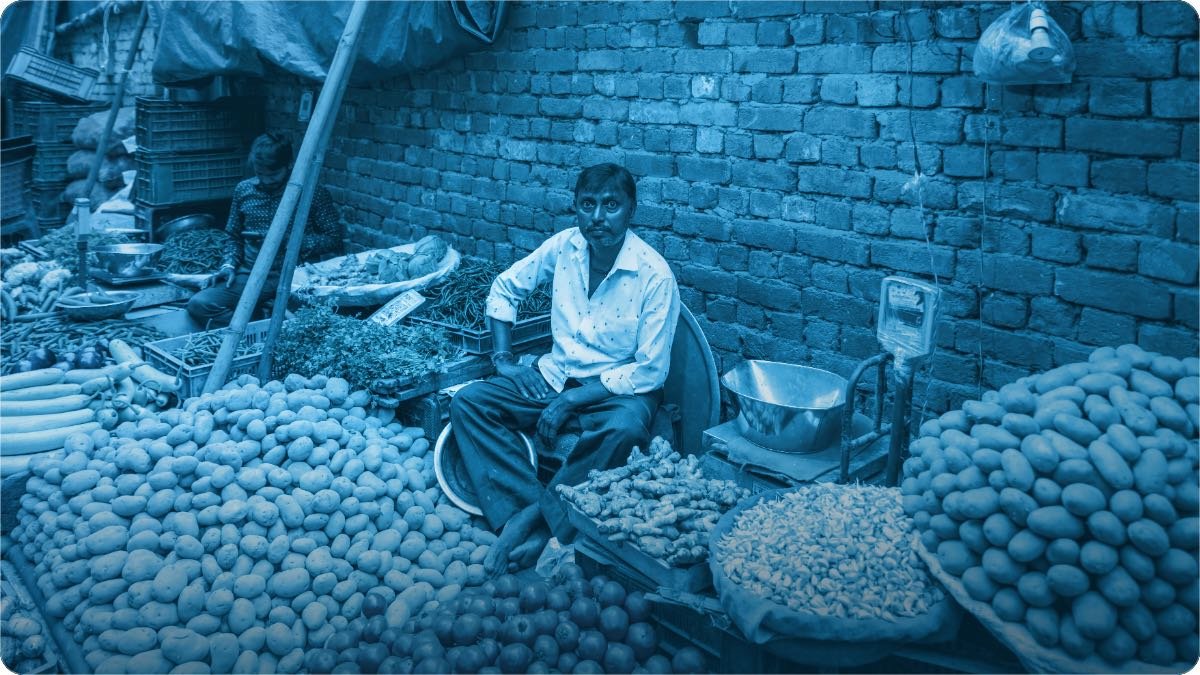
Keep one line at the counter and write down everything you had to refuse. Ten refusals a day is a buying list nobody else in the market has, and it is built out of demand you have already proved, not out of what a salesman told you would sell.
The word you say twenty times a day
Somebody asks for a thing. You do not have it. You say the word, he says it is fine, and he walks out to look for it somewhere else.
Thirty seconds later a customer needs change, another one wants two items weighed, and the thing that man asked for is gone from your head permanently. It was not important. It happens all day.
Except it happened again yesterday and the day before, with the same item, from three different people. And you still do not know that, because nothing about a refusal leaves a trace. Every sale you make writes itself into your day. Every sale you do not make disappears without a mark.
That is the strange shape of a shop's memory: it records what worked and forgets what was asked for, which is exactly backwards from what you need in order to buy well.
What refusals are actually worth
The individual refusal is small. That is the problem with it.
Say your shop refuses eight requests a day
The number in the last row is not stock you would have had to gamble on. It is stock somebody stood in your shop and asked for, by name, which is the most reliable signal any shop ever gets. Compare that to how a new line usually enters a shop, which is a supplier saying it is selling well elsewhere, and you can see which one deserves your money first.
There is a second cost underneath the first, and it is slower and worse. A customer who is refused twice starts going somewhere else first, and once he is going somewhere else first, you lose the things you did have as well.
Write it, or it does not exist
The habit is one line. It has to be written at the counter, in the moment, or it will not happen.
Keep a page, a slip or a note on your phone, and when you refuse somebody, write the item and one mark. Nothing else. Not the person, not the time, not the reason. The whole system is the name of the thing and a stroke beside it, and it takes three seconds.
Add the mark even when it is the same item you refused an hour ago, because the count is the entire point. One request is noise. Six requests in a week for the same thing is a fact, and the difference between the two is only visible if you are counting.
If you keep your stock on your phone, add the item as a product with zero quantity and let the count of times you looked for it build up naturally. In Wasoolo, keeping it as a real product with no stock means it is already there, priced and named, on the day you decide to start carrying it.
Do not filter as you write. The temptation is to leave out the things you have decided you will never sell, and that is exactly how the list stops being honest. Write everything for a month and read it once at the end; deciding while you write is how a record becomes an opinion.
Start your digital khata today
Free to start. Works offline. English, Roman Urdu & Hinglish. Your customers get their app free, forever.
Reading the list: four kinds of no
At the end of a month, the page sorts itself into four groups, and each one wants a different decision.
Reading a month of refusals
The second group is the valuable one and it is easy to miss, because each individual request felt small. Six or eight marks against one item is a line your shop is missing, and it is usually a cheap experiment to run: buy the smallest quantity your supplier will sell you and see what happens over a few weeks.
The fourth group is the one that quietly wastes money. If you keep the item and it is still being asked for, then the issue is not stock, it is that people cannot see it or you keep running out at the same point in the week. That fix costs nothing at all, and it starts with looking at where the item actually sits.
Buy small, prove it, then commit
A refusal list makes it tempting to buy everything on it at once. Do not, because a list of things people asked for is a list of possibilities and only some of them are real.
Take the top three items by count and buy the smallest quantity you can. Not a case, not a carton if you can avoid it. The goal of the first order is information, not profit, and the cheapest information is a small order that either sells or sits.
Give each one a fair run and then look at it honestly. If it sold, buy a proper quantity next time. If it did not, you have lost very little and you have learned something worth far more, which is that people asking for a thing and people buying it are not always the same crowd. That is the whole discipline behind not letting stock sit and eat your cash, and it applies to promising new lines exactly as much as to old ones.
Buy the first lot in the smallest pack even if the rate is worse. Paying slightly more to find out whether something moves is cheap; buying a bulk quantity of something nobody actually purchases is the expensive version of the same experiment. The full trade-off between the two is in buying in bulk or little and often.
The list also tells you when to stop carrying something
A refusal page is usually read as a list of things to buy. Read it the other way as well, because it quietly answers a harder question: what should leave the shelf to make room.
Every shop has a fixed amount of space and a fixed amount of money. Adding a new line without removing anything means either the shelf gets crowded or the money gets thinner, and both of those problems arrive slowly enough that nobody notices them starting.
So pair the page with the opposite page. On one side, the items people asked for and you did not have. On the other, the items sitting on your shelf that nobody has asked for in weeks. The first list is demand with no stock. The second is stock with no demand. Swapping between the two costs you nothing and improves the shelf immediately.
The swap is easier to make than an addition because it does not need new money, which is the thing most small shops are short of. Selling off one slow line at whatever it fetches and putting a requested item in its place is a straight exchange of dead weight for proven demand, and it can be done in a week.
There is one caution. Do not remove something purely because it sells slowly if it is the reason certain customers come at all. A line that moves twice a month but brings in a family who then buys forty other things is earning far more than its own count suggests. The test is not how fast an item sells; it is what walks out of the shop with it.
Say a better no while you wait
Until the item arrives, the refusal itself can be worth something, and most shops throw that away too.
Tell him when it will be there. "I will have it by the weekend" turns a lost sale into a return visit, and it costs you nothing but a small promise you have to keep. Even better, ask if he wants you to keep one aside, because a person who says yes has just pre-sold your first unit and given you a reason to trust the whole line.
If it is something you will genuinely never carry, send him to the shop that has it, by name. This feels wrong and it is not. He is going to find it anyway, and being the shopkeeper who helped him find it is worth more than being the one who shrugged. Shops that do this get sent customers back, and the goodwill lands exactly where keeping your regular customers is won or lost.
What never works is the vague no. "We do not keep that" ends the conversation and teaches him to stop asking, and once regular customers stop asking, your refusal list goes quiet and you lose your best source of information about your own market.
Start your digital khata today
Free to start. Works offline. English, Roman Urdu & Hinglish. Your customers get their app free, forever.
Common questions
I am too busy at the counter to write anything. How do I keep this up?
Make it smaller until it fits. One page, item name only, one stroke. If even that is too much during a rush, keep the page beside the galla and add the mark while you are handing over change, which is a moment your hands are already still. What you must avoid is trying to remember three refusals until the evening, because that is the version that fails on the first busy day.
What if people ask for things that are nothing to do with my shop?
Write them anyway and decide later. A grocery shop that keeps hearing requests for one household item is learning something about its street, and the only way to see it is to have written down the requests that did not fit your idea of your shop. Once a month, cross out the genuinely irrelevant ones. Deciding at the point of writing is what kills the record.
How many requests should it take before I buy something?
There is no universal number, and anybody who gives you one is guessing about your shop. What works is comparing items against each other on the same page over the same period: buy the top of your own list first, not the ones that pass some outside threshold. Over a few months you will learn your own figure, because you will see which counts turned into sales and which did not.
A customer asks for a brand I do not keep but I have something similar. Does that count?
Offer the alternative first, and if he takes it, that is a sale and not a refusal. If he leaves without buying, mark it, because the brand itself is the thing he wanted. Both outcomes are worth knowing, and the difference between them tells you whether you have a stock problem or a brand-loyalty problem, which need very different answers.
Should I tell my supplier about the list?
Yes, and it changes the conversation completely. Walking in and asking what is new gets you whatever he needs to move. Walking in and saying that people have asked you for a specific item a certain number of times gets you a straight answer about availability and rate, and often a smaller trial quantity than he would normally sell. A list makes you a buyer with information instead of a buyer with a budget.
My shop is small. I cannot add every line people want.
Then the list matters more, not less, because a small shop has to choose better than a large one. Use it to swap rather than to add: put the most requested new item in the place of the slowest thing you carry. The refusal page tells you what to bring in and your own dead stock tells you what should leave, and using them together keeps the shelf the same size while it earns more.