
ProblemShop money
Running your shop on a day with no electricity
The power is gone and the day still has to be sold. How to serve, write and count by hand, then put the whole day back into your khata by night.
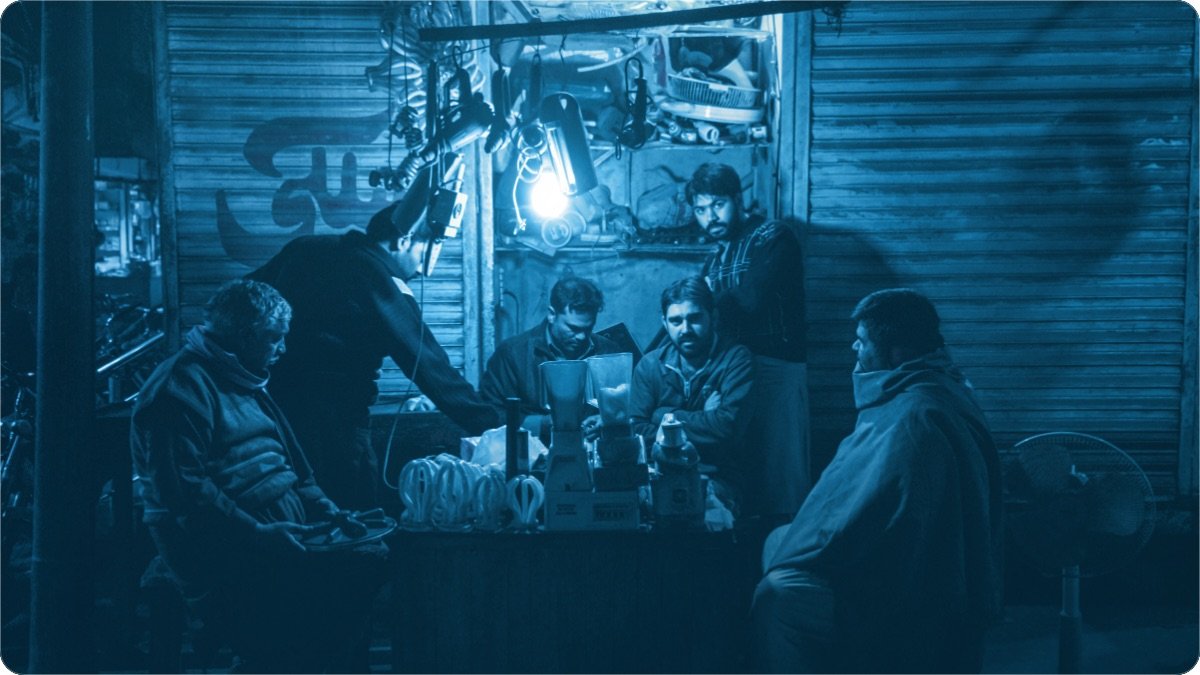
The power can be gone all day and the shop still has to trade. Keep one pad and one pen in a fixed place, write three things on every udhaar line, count the galla when the light goes and again at closing, and rebuild the whole day into your khata the same night.
The light goes at eleven and the day does not stop
Shakeel runs a kiryana shop on a lane with four other shops. The fan stops at ten past eleven in the morning. Three customers are inside, one of them waiting for change, and the freezer clicks off behind his shoulder.
Nothing dramatic happens. He opens the shutter wider, props the door for light, and carries on selling. By two in the afternoon he has served forty people, and his phone is at nine percent, because it had been left charging when the supply went.
That is where the loss sits, and it is not in the sales. He sold plenty. What he did not do was write. Between eleven and closing, twelve people took goods on udhaar, and eight of those lines exist nowhere except inside his head. By the time the supply returns, four of them are gone for good.
A power cut is a recording problem wearing the costume of an electricity problem. The bulb is not what you lose. The record is. Once you accept that, the day gets easier, because you stop trying to make the shop feel normal and start protecting the thing genuinely at risk.
Decide the writing surface before you need it
The decision that saves a day like this is made on an ordinary day, when the light is on and nothing is wrong. Choose the surface you will write on, and give it one place that never changes.
One pad. One pen kept with it. Not the back of a bill book, not the supplier's slip pad, not a loose sheet that will be under the weighing scale by evening. A loose sheet is not a record, it is a rumour.
Keep it where your hand goes without thinking: under the counter on the right, or on a nail beside the till. In poor light you will not hunt for it, and hunting is how a customer gets served and never written down.
The pen matters more than anyone expects. Most useless pads are useless because the pen walked away in somebody's pocket at noon. Keep a spare in the same drawer, with a small torch you have actually tested.
The charger belongs there too, plugged into whatever backup you have, even a neighbour's inverter or a borrowed power bank. Charging one phone is worth more than lighting the whole shop, because the phone is the only thing in the building that still knows the rates and the balances.
Three things a line, and every line
Ambition ruins a day written by hand. A shopkeeper decides that since he is writing anyway, he will write properly: item, quantity, rate, amount, time, remark. He manages four lines. On the fifth the shop gets busy and he writes nothing at all, and that lasts until closing.
So write less, and write all of it. Three things per line: the name, the item, the amount. Nothing else. A line with three things on it can be rebuilt at night. A line that was never written cannot be rebuilt by anybody.
What goes on the pad, and what people actually write
Write this
- Riaz tailor, oil 2, 520
- Nadeem, flour bag, 1,850
- Bilal milk, tea pack, 340, cash
- Counted in the galla at 11:10 am, 4,200
- Open question: oil 2, name not known, 520
People write this
- oil, 2
- the tailor, some flour
- 340
- Nothing at all, because the shop got busy
- A guess written as a fact against the nearest name
The name is the part people skip, because at the moment of writing the face is in front of you and it feels obvious. It will not be obvious after sixty customers. If two men are called Riaz, write "Riaz tailor" and "Riaz milk".
If somebody is helping you at the counter, one hand holds the pen. Only one. Two people writing on the same pad in poor light is how a khata quietly grows two versions of the truth, and today you cannot check one against the other. Let the helper serve and call the line out loud, and you write it. If he must write, he owns the pad for that stretch and you do not touch it.
Cash only is a decision, and it is about the shop
Here is the position you are in. You cannot see anybody's balance. You do not know whether Nadeem stands at Rs 900 or Rs 9,000, and the only thing that does know is a dead phone in your pocket.
Giving fresh udhaar blind is not generosity, it is guessing with your own money. So decide, out loud, before the first person asks. Either the shop takes cash only until the supply returns, or it allows a small fixed ceiling for regular faces and nothing above it.
Say it as shop policy, never as a judgement on the man in front of you. "The shop is not writing new udhaar until the record is back on" is a sentence nobody argues with. "I cannot give you udhaar today" is about him, and he will remember it. Same decision, different afterwards.
A ceiling of a few hundred rupees works well for regulars. It keeps the daily buying alive and caps the damage if you guessed wrong. What it must not do is stretch for the customer who pushes hardest, because the amount you are least sure about is always attached to the loudest voice. If you have never fixed a rule for how much udhaar goes out and to whom, a dark day is an expensive place to start.
Count the galla twice on a day like this
On a normal day you have something to check your cash against. Today you do not, so the count does double work.
Count once at the moment the supply goes, and write that figure at the top of the pad. It costs ninety seconds. Count again at closing, before anything is tidied and before anybody goes home.
The difference between those two counts is the cash the day produced. Set it beside what the pad says you sold for cash, and you have a real check where you had none. Without the first count you are comparing a closing figure against nothing, which is the same trap that makes an ordinary cash box refuse to match the book.
Keep the money moving out of the box too. If the galla is normally emptied once at night, empty it twice on a day when the shutter is half open and people stand closer to the counter than usual.
Rebuild the day the same night
Ten at night. The supply is back, or it is not and you are working by torch. Shakeel puts the pad on the counter, opens his khata, and starts at the top of the page.
This is the hour that decides what the day was worth. Overnight, a hand-written line stops meaning anything. "Bilal, oil, 480" is a complete record while the day is still in your head. In the morning it is a puzzle: which Bilal, which oil, paid at the counter or taken on udhaar.
Say: four hours run by hand, counted at ten at night
Only an example, never a claim about any real shop. The Rs 900 is a counting question you can still answer tonight. The Rs 520 is a name you did not write, and that one is usually gone.
Go line by line, in order. Do not skim the pad first and then start entering, because you will silently drop the lines you cannot explain. Enter what you understand, and mark what you cannot resolve.
Marking is the whole discipline. A line that reads "oil, 2" with no name is an open question, not a guess. Never attach it to whoever seems likely. A missing entry costs you Rs 520 once. An entry against the wrong man costs you an argument, a customer, and the trust of everybody he tells. If you have ever had an argument about a payment nobody can prove, you know which is cheaper.
The night the shop shuts, before you sleep
- Photograph every page of the pad, front and back
- Enter the lines in the order they were written
- Tick each line on the pad as it goes into the khata
- Mark what you cannot resolve instead of guessing it
- Set the closing count against the count you took at midday
- Write the difference as a difference, never adjust a sale
- Keep the pad for a week, do not throw it out tonight
Then close the loop the following day. Ask the two or three people you can identify, quietly: "The pad shows oil against your name from yesterday, does that sound right?" Most will confirm it. The ones who did not take it will say so, and you lose a little money and no goodwill. What you must not do is leave those questions sitting on the pad, because in a week the pad is under a carton and they have answered themselves in the customer's favour.
When the supply comes back
A record that lives on your phone and in the cloud does not go dark when the shop does. Everything you entered in the morning is still there, and the moment the phone has charge every balance is readable again, so the guessing stops when the screen comes on rather than when the light does. In Wasoolo that record sits on the phone and is backed up to the cloud, so a shop with no supply is still a shop with a khata.
What no app can do is run on a phone with no battery. Wasoolo will not light your shop and it will not write the twelve lines you did not write. The pad still has to exist and somebody still has to put the day back in that night. What changes is what the pad stands in for: on paper alone it is your whole record, and if it is lost you have nothing. Beside a khata that backs up and restores, it is a four-hour gap in a book that otherwise takes care of itself, which is the same reason a lost phone should never cost you your record.
Start your digital khata today
Free to start. Works offline. English, Roman Urdu & Hinglish. Your customers get their app free, forever.
Common questions
Should I just close the shop when the power goes for the whole day?
Usually no. A shop that stays open when the lane is dark picks up the custom of every shop that closed. Close only when the goods are at risk, or when you cannot see well enough to serve safely.
My phone dies by afternoon. What is the cheapest fix?
A power bank kept charged and never used for anything else. Keep it in the same drawer as the pad and treat it as shop equipment. One charged phone means you can still check a rate, read a balance, and photograph the pad.
A regular customer wants udhaar and I cannot see his balance. What do I say?
Give a small fixed amount and say the limit belongs to the shop, not to him. "Until the record is back on, the shop is writing up to five hundred for everybody." He gets served, you cap the risk, and nobody feels accused.
What if I forget a line and only remember two days later?
Enter it with the correct date, not the date you remembered, and mark it as a late entry. Then tell the customer before you send any total. A balance that grows without warning is what starts arguments.
Can I photograph the pad instead of entering it that night?
Photograph it, but that is a backup and not the entry. It protects you if the pad is lost and costs three seconds. It puts nothing into anybody's balance, so the total stays wrong until you type it in. Do both.
Is there any point writing prices on the pad, or only amounts?
Only the amount. Prices slow you down and the amount is what the customer owes. If a rate needs checking later, put a small mark beside that line and sort it out at closing.