
ProblemStock
Catch expiry dates before they cost you money
Expired stock is money you already paid for, thrown away twice. Here is the five-minute shelf routine, the items to watch, and how to sell it in time.
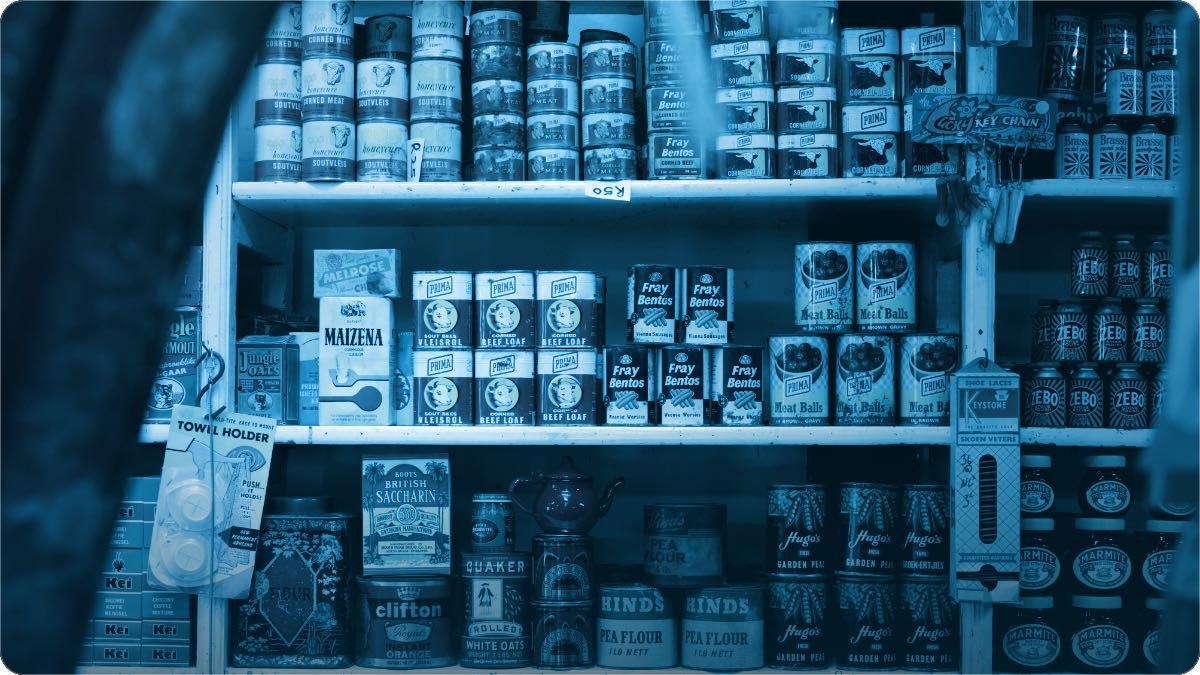
Expired stock is money you already paid for, thrown away a second time. In a small shop you do not need a system, you need a habit: new stock behind old, one shelf checked a week, and anything near its date moved to the front while it can still be sold at full rate.
The loss you never see on any page
A shopkeeper notices a customer who does not pay. Nobody notices a carton quietly ageing at the back of a shelf.
That is the trouble with expiry. There is no argument, no phone call, no moment where somebody wrongs you. One day you reach behind the front row and find four packets that cannot be sold, and by then the decision that caused it was made two months ago, when the delivery was pushed in at the front instead of the back.
The amounts feel small each time, which is exactly why they are allowed to repeat. Four packets here, a carton there, a shelf of something that stopped selling. Add a year of it together and it is usually larger than the one bad debt everybody in the family remembers.
And unlike a bad debt, none of it can be recovered. The customer who owes you might pay in the end. The expired carton is finished.
What it really costs to lose one carton
The purchase price is not the loss. The loss is the purchase price plus everything you now have to sell to get back to level.
Say one carton of packed dairy goes past its date
That last row is the one worth reading twice. On thin margins, a Rs 2,400 loss needs a very large amount of ordinary selling behind it before the shop is where it was. Nobody thinks in those terms while stacking a shelf, and it changes how carefully you stack it once you do.
There is a second cost that does not appear as a number. A customer who gets home and finds the date has passed does not usually come back to argue. He just stops buying that thing from you, and often stops trusting the rest of your shelf too. That loss is much bigger than the packet, and you will never know it happened.
The shelves that carry most of the risk
You do not need to inspect the whole shop. Most of the danger sits in a few places, and you already know which ones they are.
The shelves worth a look every week
- Anything with milk in it: powder, cream, packed dairy
- Oil, ghee and anything that goes rancid quietly
- Bread, bakery and anything a supplier delivers fresh
- Medicines, baby food and anything a child will eat
- The slow item at the back that nobody has asked for in weeks
Notice what those five have in common. Four of them are things a customer eats or gives to a child, so the cost of being wrong is not only the stock, it is your name in the street. The fifth one is different: it is the slow item, and it is dangerous simply because nothing about it draws your attention.
The slow item deserves a separate thought. It is not really an expiry problem, it is a dead stock problem that ends in an expiry date, and the answer is upstream: stop reordering it, sell what you have at whatever gets it moving, and use the space for something that turns over.
A five-minute routine that fits a busy shop
The routine that works is the one you can do in the quiet hour without closing anything.
Five minutes, one shelf, once a week
- 1Pull everything forward, right to the shelf edgeThe old stock is always at the back, because every delivery gets pushed in front of it.
- 2New stock goes behind the old, never in frontThis one habit prevents most expiry losses on its own, and it costs nothing but the extra second at delivery.
- 3Move anything close to its date to the front and to eye levelSelling it at full rate now is worth far more than any clever discount later.
- 4Write the two or three names you are watchingA short list you look at on delivery day stops you reordering the exact thing already sitting unsold.
Step two is the whole system in a sentence. If new stock always goes behind old, the shelf sorts itself out and most losses stop happening. It takes one extra second per carton at delivery time and it is the single highest-value habit in this article.
Step one matters because the shelf hides the problem from you. Everything looks full from the front. Pull it forward and the old stock appears, which is also the moment you notice the three packets of something you stopped selling months ago.
Do one shelf a week and the whole shop comes around by itself, without ever having to shut for a count. That is the same principle behind keeping stock right without counting all day: little and regular beats a big effort that never actually happens.
Start your digital khata today
Free to start. Works offline. English, Roman Urdu & Hinglish. Your customers get their app free, forever.
Sell it while it can still be sold
Once something is close to its date, speed matters more than margin. A packet sold at your cost is a small loss. The same packet thrown away is a full loss, plus the shelf space it wasted on the way.
Move it to the front, at eye level, where the hand reaches first. That alone shifts a surprising amount of it at the normal rate, because most customers are choosing by convenience rather than by date.
Bundle it with something that sells fast. Two items together at a price that is clearly worth it will move stock that no amount of standing alone would have moved.
Offer it to the customers who will use it today rather than store it. The tea shop, the caterer, the family buying for a gathering. They care much less about the date because the thing is going to be finished by evening.
And be straight about it when the date is close. A customer told plainly that something is near its date and priced accordingly will usually thank you and buy it. The same customer who discovers it at home will not.
Buying is where the problem starts
Everything above is repair. The prevention happens at the moment you place the order.
Order for how fast a thing actually leaves your shop, not for the rate the supplier is offering. A better rate on twelve is not a better rate if four expire, and that arithmetic is worth doing every time somebody offers you a deal on quantity. It is the whole argument behind buying little and often on the wrong items.
Keep the buy rate written down, because you cannot judge any of this without it. Wasoolo holds the buy rate against each product alongside what you sell it for, so when you are deciding whether to take a bigger lot, the actual money at risk is a number you can look at rather than a feeling.
Check dates when the delivery arrives, not when you sell it. Stock that reached you already halfway through its life is the supplier's stock problem being handed to you, and it is completely fair to say so at the door and ask for fresher.
Finally, watch what your own records tell you about speed. If something has not moved in two months, that is your warning long before any date on the packet, and it is also the difference between finding a shortfall early and discovering stock has quietly gone missing with no explanation at all.
Start your digital khata today
Free to start. Works offline. English, Roman Urdu & Hinglish. Your customers get their app free, forever.
Common questions
Will my supplier take back stock that is close to its date?
Some will, some will not, and it depends far more on the relationship than on any written policy. Ask before you order rather than after, and ask it plainly as part of the deal: what happens to what does not sell. A supplier who takes returns is worth a slightly worse rate, and a supplier who refuses is telling you to order smaller quantities from him, which is useful information either way.
Is it legal to sell something on its expiry date?
Rules vary by product and by place, and food and medicine are treated much more strictly than most things. The practical position for a small shop is simpler than the legal one: do not sell food or medicine past its date at any price, do not sell it cheap as a favour, and do not let a helper decide the question. The money involved is never worth the risk to a customer or to your name.
What do I do with stock that has already expired?
Take it off the shelf the moment you find it, keep it away from saleable stock, and dispose of it properly rather than leaving it in the store room where it will drift back. Then write down what it was and what it cost, because the list is the only thing that stops the same item expiring again next season. Most shops lose the same two or three products over and over.
My helper stacks new deliveries at the front. How do I stop that?
Show him once at the shelf rather than telling him at the counter, because it is a physical habit and not an instruction. Say the reason out loud, that old goes in front so it sells first, and then check that shelf yourself for a couple of weeks. It takes about three deliveries to stick, and it is the cheapest training you will ever do.
Should I write expiry dates in my khata app?
A khata app is built for money and stock counts rather than dates on packets, so the honest answer is to keep the dates where the goods are: on the shelf, on a small note, or in the packet order itself. What the app is genuinely good for is telling you which items are moving slowly, and slow movement is what turns into an expiry problem in the first place.
How many shelves should I check if my shop is very small?
If your whole shop is a few shelves, do the risky ones weekly and everything else once a month, and do it on the same day each time so it becomes part of the week rather than a task you remember. The size of the shop is not what makes this work. Doing it on a fixed day is.