
CompareUdhaar
Call, message or visit: what gets you paid
The three ways to ask for your money, what each really costs, and a ladder that decides in advance when to move up instead of leaving it to a bad day.
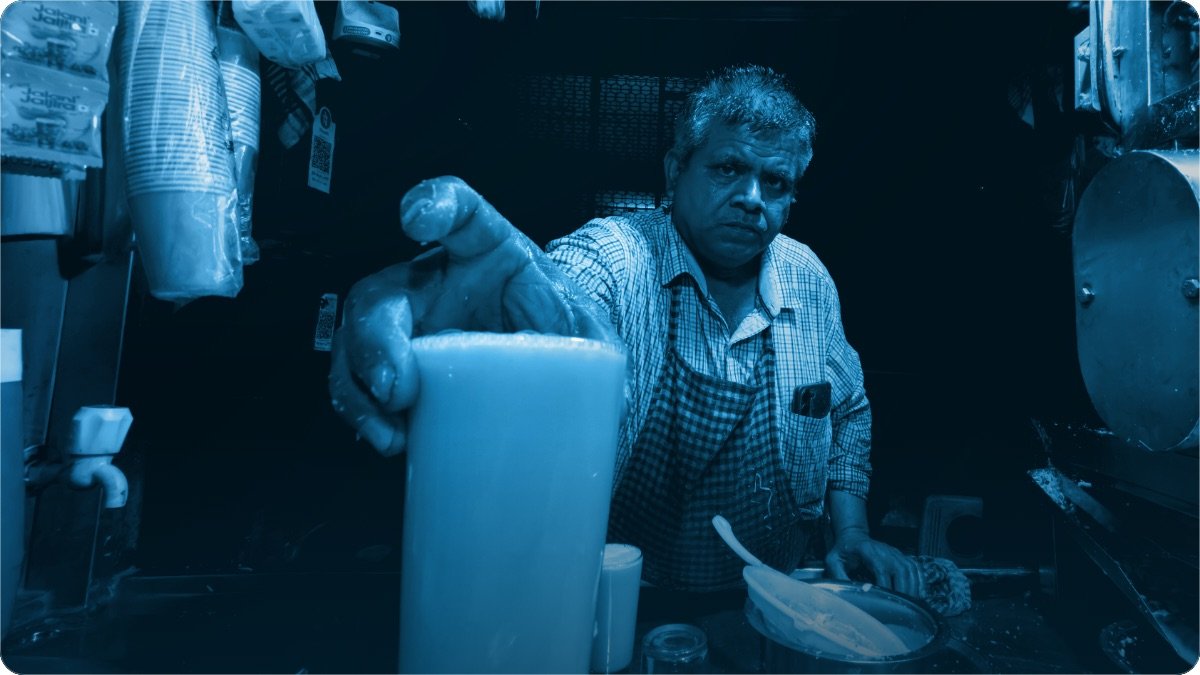
A message is for reminding somebody who simply forgot. A call is for a person who has stopped answering messages. A visit is for money that is old enough to be at risk. Use them in that order, move up on a schedule rather than on a bad mood, and never start at the level you cannot go past.
Three ways to ask, and they are not the same
Every shopkeeper has a default. Some send a message to everybody, some pick up the phone, and some believe that only standing in front of a man gets money out of him.
All three are right about somebody and wrong about most people. The move that works on a forgetful regular is completely wrong for a customer who has been avoiding you for six weeks, and the move that works on the avoider will insult the regular badly enough to lose him.
So the question is not which one is best. It is which one fits the customer, the balance and the moment, and there is a rough answer that is right most of the time.
The cost is what makes the choice matter. Your time is the scarcest thing your shop has, and the three moves cost wildly different amounts of it.
What each one actually costs you
Put a number on the three before comparing anything else, because the number changes how you feel about all of them.
Say you leave the counter to collect Rs 1,800
A message costs you under a minute. A call costs you a few minutes and some emotional energy, because you might be answered by somebody angry or embarrassed. A visit costs you half an hour minimum, and in a one-man shop it also costs you the shop being shut or run by somebody else while you are gone.
That last point is the one most shopkeepers ignore. If you leave the counter for forty minutes to collect Rs 1,800, and the shop takes Rs 900 less than it would have taken, the collection earned you Rs 900, not Rs 1,800. Doing that for four customers in one afternoon can genuinely lose money.
None of this means visits are wrong. It means visits are expensive, and expensive tools are used on the amounts that justify them.
There is a second cost nobody counts, which is how many customers a move can reach in one sitting. In the time one visit takes, you can send twenty reminders or make eight calls. A shop with forty names outstanding cannot visit its way out of the problem, and the ones that try end up visiting four people and ignoring thirty-six.
The message: cheapest, and easiest to ignore
A written reminder is the right first move for almost every balance, and it is the one shops send worst.
Its real strength is that it is not confrontational. Nobody loses face reading a message. The customer can deal with it in his own time, which means the ones who genuinely forgot pay without any awkwardness ever entering the relationship.
Its weakness is equally clear. It is easy to ignore, it never tells you whether it was read, and a customer who is deliberately avoiding you will let ten of them pass without a flicker.
Written well, it does more than remind. Put the amount, put the date it was taken, and put a specific question at the end: "Rs 3,400 from the 12th, will Friday suit you?" A message with a number and a question gets a reply far more often than one that says please clear your balance, because you have given him something easy to answer.
Keep it short enough to read on a screen without scrolling. A long, polite paragraph is skimmed and forgotten; two lines with a figure in them are read completely. Politeness lives in the wording, not in the length.
Send it at a time he can act on. A reminder at nine at night is read in bed and forgotten by morning. The same words in the middle of the morning, when he has money on him and your shop is open, get paid the same day.
Start your digital khata today
Free to start. Works offline. English, Roman Urdu & Hinglish. Your customers get their app free, forever.
The call: the one that gets an answer
The phone is the workhorse, and it is where most recovery actually happens.
It has one property the other two do not: it forces a response. A customer on the phone must say something, and whatever he says is useful. He gives you a date, or he gives you an excuse, or he gives you silence, and all three tell you what to do next.
It is also the only move where you can hear how the situation actually is. A man who is embarrassed sounds different from a man who is annoyed, and different again from a man who has decided not to pay. Thirty seconds of a person's voice tells you more than a month of unanswered messages.
Keep the call short and finish it with a specific agreement. Not "so you will pay soon" but "so Thursday, Rs 2,000, and I will keep the rest running." Then write down what he said. Recording the promise is what turns the next call from a repeat into a follow-up, and it is the only thing that works on the customer who promises every time and never pays.
Call from somewhere quiet if you can. A collection call made across a busy counter, with three customers listening, changes your tone without you noticing and makes it harder for him to be honest with you about why he has not paid.
Do not call more than once a week for the same balance. Beyond that it stops being a reminder and becomes pressure, and pressure is what makes an embarrassed customer stop answering the phone entirely, at which point you have lost your cheapest tool.
The visit: expensive, and hard to refuse
Going in person changes everything about the conversation, which is exactly why it should be used carefully.
Its strength is presence. It is very hard to say nothing to a man standing in front of you, and it is very hard to promise a date to somebody who is looking at you when you have no intention of keeping it. Visits recover money that phones cannot.
Its cost is not only your time. A visit is visible. Neighbours see it, and depending on how you do it, so does the customer's family. That visibility is a real tool and it is also how a shopkeeper accidentally destroys a relationship he wanted to keep.
So the rules for visiting are simple. Go alone. Go at a time that is not embarrassing. Do not raise your voice, do not explain the situation to anybody who opens the door, and ask for the customer by name rather than announcing why you have come.
One shopkeeper made his visits at closing time, on his way home, and only to houses on the road he was already taking. He was never seen making a special journey, the customer never felt singled out, and he lost no trading hours at all. Half of what looks like the cost of visiting is really the cost of visiting badly.
And go with something in your hand: the amount, the dates, and a written slip of what he owes. A visit where you can put a page in front of him is a conversation about a record. One where you cannot is an argument about memory, and the person on his own ground always wins that.
Match the move to the customer, not your mood
The real skill is choosing, and the choice depends on the customer far more than on the amount.
Which customer needs which move
Notice what the table is really sorting by. It is not size, it is how much you know about him and how lately he has responded to you at all. A large balance from somebody who answers his phone every time does not need a visit. A small balance from somebody who has gone quiet for two months might.
The one rule that holds everywhere is not to start at the top. If your first move on a two-week-old balance is to arrive at his house, you have used your strongest tool on the mildest problem and you have nothing left when it gets serious.
The other rule is to keep it the same for everybody. A shop that reminds one customer and not another is making a judgement about people, and people can feel it. Reminding everybody on the same schedule is not personal, which is exactly what makes it survivable, and it is the same thinking behind recovering udhaar without losing the customer.
The ladder: move up on a schedule, not on a bad day
What makes all this work is that the escalation is decided in advance rather than in the moment.
A ladder decided in advance, not in the moment
- Day 15A short written reminder with the amount and the dateSoft
- Day 30A short call that ends with an agreed day and amountSoft
- Day 45A second call, referring to what he promised last timeFirm
- Day 60A visit, alone, with the account written on a pageLast
A schedule protects you from yourself. Every shopkeeper has had the day when three things went wrong and he called a customer angrily about a balance that was only eleven days old. That call cost more than the balance did.
It also protects the customer, and he can feel it. A man who knows the shop reminds at fifteen days and calls at thirty is dealing with a system, not with your temper. Systems are much easier to pay.
And it makes the timing of your whole shop simpler. Whether you chase weekly or at month end changes the numbers on the ladder but not its shape, which is the choice weighed up in collecting weekly or waiting for month end.
What none of the three can fix
It is worth being honest about the limits, because shopkeepers waste months escalating against problems that no amount of asking can solve.
If the customer genuinely has no money, none of the three moves produce any. What they produce is a schedule, which is a different and still valuable thing: a small amount weekly, agreed and written, beats a large amount promised and never paid.
If the balance is old enough that he has stopped treating it as a live debt, the channel is not your problem. The problem is that too much time passed, and the answer is a different conversation entirely, closer to what to do when a customer has disappeared.
And if you are having to chase the same customer every single month, no channel fixes that either. That is a credit decision showing up as a collection problem, and the fix happens at the counter when he next asks for goods, not on the phone afterwards.
Start your digital khata today
Free to start. Works offline. English, Roman Urdu & Hinglish. Your customers get their app free, forever.
Common questions
Which of the three actually recovers the most money?
The phone recovers the most for most shops, because it is cheap enough to use often and it forces a reply. Messages recover the easy money that only needed reminding, and visits recover the difficult money that nothing else reaches. A shop that only uses one of them is leaving something behind whichever one it picked.
Is it rude to send a written reminder to an old customer?
It is the least rude of the three by a distance, since nobody has to lose face reading a message and he can settle it quietly. What feels rude is a reminder that arrives with no amount and no date, because that reads as a general complaint about him. Give him the figure, the day it was taken and one easy question to answer.
How many times should I ask before I go to his house?
Two reminders and two calls across about a month is a reasonable ladder for an ordinary balance, and going earlier than that spends your strongest move on a mild problem. What matters more than the count is that the steps are spaced and decided in advance. A visit that arrives after a predictable sequence lands very differently from one that arrives out of nowhere.
Should I ever send somebody else instead of going myself?
For a straightforward collection from a customer who knows you both, it is a reasonable way to save half an hour, as long as he carries a written list and hands over a receipt on the spot. For a difficult balance it is usually a mistake, because the person you send has no authority to agree anything and the customer knows it. Send somebody for routine rounds, go yourself for the hard ones.
What if he answers the phone and argues about the amount every time?
Stop discussing the amount on the phone, because that argument cannot be won without a record in front of both of you. Offer to sit with him and go through the account from the first entry forward, and make it a normal offer rather than a challenge. Once the total is agreed, the collection conversation becomes a completely different and much shorter one.
Do written reminders work if the customer cannot read well?
Send a short voice message instead, which does the same job and carries your tone with it, or make it a very brief call. What you should not do is assume and skip the reminder step entirely, since that pushes you straight to a visit. The point of the first step is to give somebody an easy way to pay without any awkwardness, and there is more than one way to deliver that.