
CompareCustomers
A price board on the wall or quote each time?
Showing your rates ends the haggling and ties your hands. Quoting keeps room to move and quietly costs you money. What each one gives, and the middle answer.
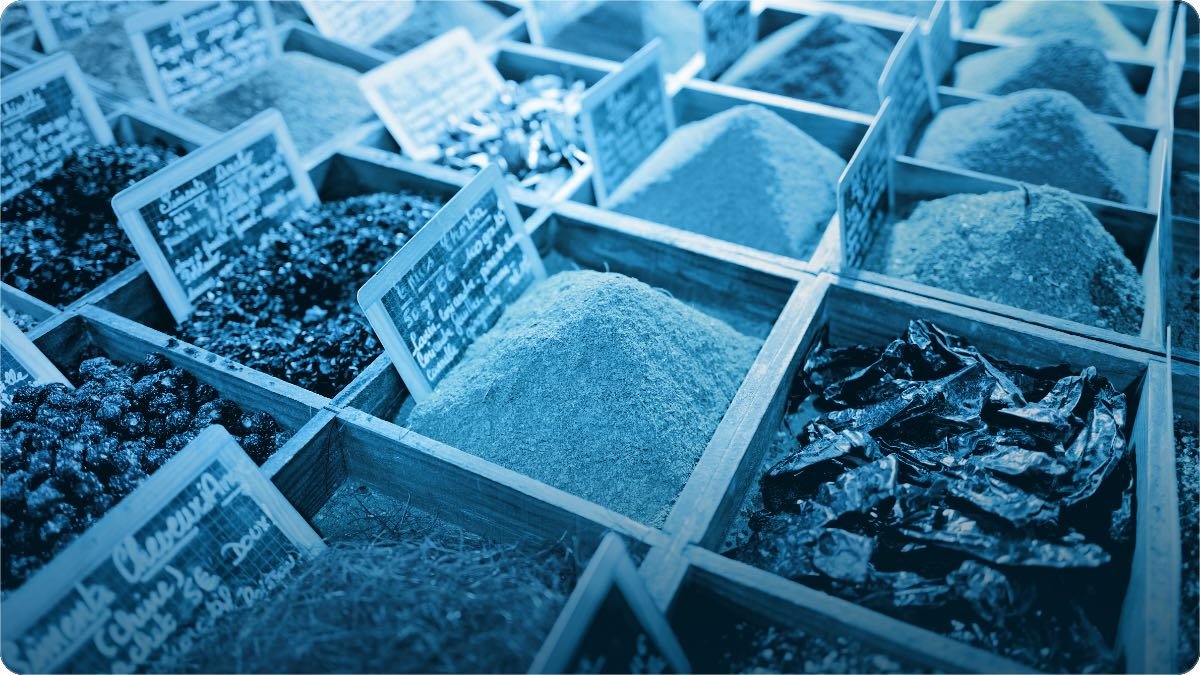
Put your steady, most-asked items on a board and keep quoting the rest. The board ends the daily haggling on the goods people compare, stops your helper inventing prices, and makes one rate for everybody visible. Quoting keeps the room to move you need on items whose cost changes with every delivery.
What each one actually gives you
A price on a wall and a price said out loud are not the same price, even when the number is identical.
The board is a promise made to everybody at once. It says this is what the item costs here, to you and to the man behind you and to the woman who comes in tomorrow. That promise is most of its value, and it is why a board changes how customers behave long before it changes anything about your margin.
The spoken price is a private answer to one person. It can bend for a regular, hold firm for a stranger, and go up for somebody buying at eleven at night. That flexibility is real and shopkeepers are right to value it. What they usually get wrong is the price of it, because a spoken rate is also a decision you have to make forty times a day, in front of a queue, while doing something else.
So the choice is not between honest and dishonest. It is between a shop where the price is a fact and a shop where the price is a conversation, and each of those suits different goods.
The two columns, side by side
The same shop, the same goods, two ways of saying the price
Look at the fourth row before any of the others, because for most shops it decides the matter.
A helper who cannot see a written rate has three choices when you are not standing there: guess, telephone you, or give it at a number he is sure nobody will complain about, which is always the low one. He will not do this to cheat you. He will do it because the alternative is an argument with a customer over money that is not his, and no employed person picks that fight. A board removes the choice entirely, and it is by far the cheapest way to make a helper's prices match yours, far easier than any amount of instruction.
The fifth row is the quiet one. When your buy rate rises, a board forces you to act, because the old number is sitting there in public being wrong. Without a board, nothing forces anything, and the rise gets absorbed for weeks or months out of a margin you never see moving. That is exactly how a supplier's quiet rate rise ends up being paid for by the shop instead of by the shelf.
The board's case
The first argument is time, and it is bigger than it looks. Four questions an hour, half a minute each with the follow-up, is most of an hour a day spent saying numbers. In the busiest part of your evening that hour is worth more than any single sale in it.
The second is trust, and it is the one that actually brings people back. A customer who sees the price before he reaches the counter never has to wonder whether the man in front of him got a better number. That doubt is small and constant, and it is the seed of "he charged me more than last time" arguments that cost far more than the rupees in dispute.
The third is that a board sets a floor you can defend. When somebody asks for a reduction, the answer is not a judgement about him, it is a fact about the shop: "That is the shop's rate." Every shopkeeper who has done both will tell you that refusing from behind a written number is a different experience from refusing on your own authority, and it is why a board helps most in shops where customers ask for a discount constantly.
The fourth is that it advertises. A visible rate on a good item pulls people who were only walking past, and it does that all day without you saying anything.
There is a fifth that shopkeepers rarely mention until they have lived with a board for a season: it makes you look at your own prices. A number on a wall is a number you walk past forty times a day, and sooner or later you notice that one of them has not moved since before your last two deliveries. Prices kept only in the head are never reviewed, because nothing ever puts them in front of you.
The quoting case
Quoting is not laziness and it is not a trick. It genuinely earns its place in three situations.
The first is goods whose cost moves constantly. Vegetables, some grains, anything where the delivery rate changes every few days. A board on those items is wrong within a week, and a wrong board is worse than no board.
The second is a shop with two genuine customer types. If some of your trade is bulk and some is single pieces, one number on a wall cannot serve both, and trying to make it do so is the problem two rates for one item exists to solve.
The third is relationship pricing, done deliberately. A small allowance for the customer who has bought from you for nine years is a real business decision. It builds exactly the loyalty that keeps a shop steady, and it works only if it stays small, deliberate and rare.
The weakness is that almost nobody keeps it small, deliberate or rare.
There is a fourth situation, and it is the honest one: some shopkeepers simply read people well and price accordingly. A man who can tell from thirty seconds of conversation what a customer will pay is doing something a board cannot do, and in a bazaar where that is the expected way of trading he will earn more by quoting. If that describes you, the argument below is not that you are wrong. It is that the reading has to stay deliberate, because the same skill applied on tired evenings turns into giving in.
The hidden cost of quoting
This is the part worth reading slowly, because it is invisible from inside the shop.
Say one item, Rs 260 on the shelf, quoted forty times a week
Made-up figures, chosen to show the shape. Put your own busiest twelve items and your own honest habit into these rows before you decide this does not apply to you.
Nothing in that box was a bad decision. Every single reduction was reasonable at the moment it was given, to a person who deserved it, for a good reason. The problem is that nobody ever adds them up, so a shop can give away a month's profit in ten-rupee pieces and experience it as being a decent human being.
Watch for the pattern in who receives them. In most shops the customers who ask are the ones who get, and the customers who never ask quietly pay the full rate to fund it. That is the opposite of what you would design: your least demanding customers are subsidising your most demanding ones, and the loyal, undemanding ones are exactly the people you would want to reward if you were choosing, which is the whole argument behind keeping regular customers.
A board does not stop you giving anything. It changes it from a reflex into a decision, made openly, off a stated price. That difference is the entire financial argument for a board, and it is worth more than the time it saves.
Start your digital khata today
Free to start. Works offline. English, Roman Urdu & Hinglish. Your customers get their app free, forever.
When the rate moves, the board becomes work
A board is a promise, and a promise you do not keep costs more than one you never made.
Keeping a board true when your buy rate moves
- 1Put only the items whose rate is fairly steady on itA board full of items that move every fortnight is a board you will stop updating.
- 2Write the rates so one can be changed without the restSeparate cards or a slot board. A single painted sheet is why most boards go out of date.
- 3Change the card the same day the delivery comes inThe new buy rate arrives with the goods. That is the only moment you will reliably remember.
- 4Say the change out loud to the first few customers"The rate went up on Tuesday." Said by you, it is news. Discovered by them, it is a complaint.
- 5Never leave an old rate up while charging a new oneOne hour of that undoes a year of the trust the board was built for.
- 6Check the whole board once a week, at a fixed timeFive minutes with your own purchase notes beside you. That is the entire upkeep.
Most abandoned boards fail for the same mechanical reason: everything was painted on one sheet, so changing one number meant redoing the whole thing, so nobody did. Use separate cards, a slot board, or a chalk column. Make one item changeable in ten seconds and the board survives for years.
Tie the update to the delivery, not to a day of the week. The new buy rate walks into your shop on the back of a van, and the minute the goods are unloaded is the only moment you will reliably remember to change the card.
And when a rate does go up, say it out loud to the first few customers who buy that item. Announced by you it is news, and people accept news. Discovered by them it is a complaint, and a complaint about a price change is a complaint about you.
The one thing never to do is leave an old rate on display while charging a new one. An hour of that undoes a year of the trust the board was built for, and it is the single fastest way to get the reputation you put the board up to avoid.
The middle answer
Almost no shop needs to choose one for everything. The useful question is which items go up, not whether a board is right.
Put an item on the board when these are true
- Customers ask its price several times a day
- Its rate holds for weeks at a time
- Everybody pays the same for it anyway
- Your helper sells it when you are not there
- It is the item people compare between shops
- Bargaining over it wastes your busiest minutes
- Its rate changes with every delivery
- You genuinely charge different customers differently
Take the six or twelve items people ask about most, that hold their rate for weeks, that everybody pays the same for anyway, and put those on the board. That single list covers most of the questions you answer in a day, most of the bargaining you endure, and most of what a helper needs to know.
Building that list takes one week and no thinking. Keep a card by the counter and mark an item every time somebody asks its price. At the end of the week the marks have sorted your whole shop for you, and the top of that list is almost never what a shopkeeper would have guessed on the first day. The items you handle most are not the items people ask about most, and the board belongs to the second group.
Leave off anything whose cost changes with every delivery, and anything you genuinely price differently for different buyers. Leaving items off is not dishonesty and no customer has ever objected. A board that shows fifteen true prices is trusted. A board that shows forty prices, six of which are stale, is not.
Knowing which items belong on the list is easier when the rates are written down somewhere other than your memory. If you keep stock in an app, the buy rate lives on the item, so you can see which items have actually moved this season and which have held. In Wasoolo that also means the shelf price you decide is sitting on a real cost rather than a remembered one, and the board reflects a number you can defend.
Deciding for your own shop
Three facts about your shop decide this more than any principle.
How often you are absent. If you are behind the counter all day every day, quoting costs you time but nothing else. If a helper runs the shop for hours at a time, a board is not a style choice, it is the only way your prices survive your absence.
What you sell. A shop of packaged goods with stable rates is built for a board. A shop of fresh produce priced off a morning market is not, and forcing one on is how boards end up wrong.
Who your customers are. In a bazaar where bargaining is the expected way of doing business, a board that says nothing is negotiable can read as unfriendly. In a residential street where people shop in a hurry on the way home, the same board reads as respectful of their time. That difference matters more than any of the arithmetic, and it is the same reading of your own trade that decides whether you want one big buyer or many small ones.
Try it on ten items for a month. It is a cheap experiment: a few cards, an hour of work, and it can be reversed on a Tuesday afternoon if it does not suit you. Most shopkeepers who try it keep the board and are surprised by which part they valued, which is almost never the money and almost always the quiet.
Start your digital khata today
Free to start. Works offline. English, Roman Urdu & Hinglish. Your customers get their app free, forever.
Common questions
Will a price board stop customers bargaining altogether?
Not entirely, but it moves the conversation. Instead of arguing about what the price is, a customer asks whether you can do better, and answering that from behind a written number is far easier than inventing one.
Which items should go on a board first?
The ones customers ask about most often that hold their rate for weeks. Six to twelve items usually covers the majority of the questions you answer in a day, and a short true board beats a long stale one.
What if my supplier's rate changes every week?
Keep those items off the board and quote them. A board is a promise about a price, and a promise you have to break weekly does more damage than the convenience is worth.
Can I still give a regular customer a lower price with a board up?
Yes, and it works better. It becomes a stated allowance off a known rate, given deliberately, rather than a private number he may mention to somebody else. Keep it small and keep it rare.
My helper gives things cheaper when I am out. Does a board fix it?
It fixes most of it, because he no longer has to guess or take responsibility for a number. Put the rate where he can see it and give him one rule: the board's price, for everybody, with no exceptions.
Should the board show wholesale rates too?
Only if your wholesale terms are genuinely fixed and public. If they depend on quantity and relationship, keep them off the board and handle them at the counter, or every retail customer will ask for the lower line.