
ProblemCustomers
Who should be able to see a customer's khata
A balance is the customer's private business, not shop news. Decide who may read a page, what a relative gets told, and how to answer without losing anybody.
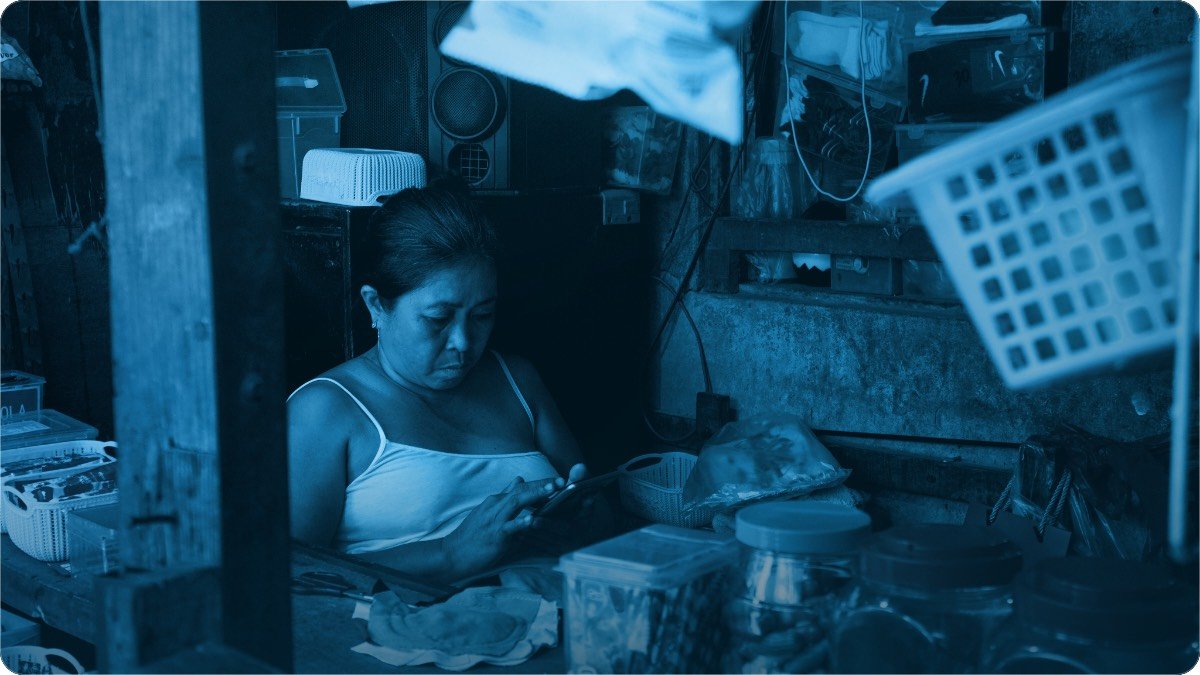
Only two people, by default: you and the customer himself. A helper sees what his work needs and nothing more. A relative, a neighbour or another shopkeeper gets a polite nothing, whoever they say they are. What a man owes is his own business, and a shop that leaks it loses him.
The neighbour who asks how much he owes
A woman you have known for years leans on the counter while you are weighing rice. Her voice drops. "That Yousuf, from the corner house, how much has he got running on your khata?"
It is not really a question, it is an invitation. You are being offered a small piece of belonging: two people who know something a third does not. And it costs nothing to answer, so most shopkeepers answer.
Then it costs everything. Within a week Yousuf hears his balance repeated in a street conversation, works out that it came from exactly one place, and starts buying his oil from the shop that does not discuss him. He will never tell you why, and you will never know you lost him.
Say one leaked balance costs you one quiet regular
Nobody thinks of a khata as private information. It is. It is the most private information a small shop holds, because it is a record of who is short of money, and everybody in the street would like to know that about everybody else.
Whose information is it
Think of a page as belonging to two people at once. The money is yours. The facts on the page are his.
That single idea settles almost every awkward moment at the counter. You may chase your money as hard as you like. You may print a statement, ask for payment, refuse more credit, send a reminder. What you may not do is turn the page into news, because the balance is a fact about his household, not about your shop.
There is also the plain business reason. Credit is trust in both directions. A customer hands you an admission of weakness every time he says "write it down", and if that admission comes back to him from a third person, he will stop giving it to you. The customers you lose this way are almost always the quiet, regular ones you least want to lose, which is why it belongs in the same conversation as keeping regular customers.
Four people ask, and each gets a different answer
Who asks, and what each one gets
The customer himself. Everything, whenever he wants it, in as much detail as he likes. His entry list, his payments, his balance, printed if he asks. This is the one person who has an unlimited right to the page.
Somebody sent by the customer. His son, his wife, his worker. Give them what the customer clearly wants them to have, which is usually the amount and nothing else. If it is a large balance and you are not sure, one phone call to the customer solves it in fifteen seconds.
A relative or neighbour asking on their own. Nothing. Not a number, not a range, not a face. "I do not talk about anybody's khata, including yours" is a full answer, and it is the sentence that protects you too, because now everybody knows their own page is safe with you.
Another shopkeeper. This one feels different because he has a real reason: he is deciding whether to give the man credit. Still nothing about the amount. You can honestly say "I would rather not discuss anybody's account", and you can talk generally about your own rules. A shopkeeper who respects that will respect you; one who does not would have discussed you the same way.
Start your digital khata today
Free to start. Works offline. English, Roman Urdu & Hinglish. Your customers get their app free, forever.
Inside the shop: your helper, your family, your counter
The leak that costs the most is not the nosy neighbour. It is somebody who works for you and does not know that this is a rule.
A helper handling the counter has to see balances, or he cannot sell on credit at all. What he does not need is a reason to talk about them. So say it out loud, once, as a plain condition of the job: what is on the page stays on the page, and it is never mentioned outside the counter, not even at home. Most helpers have simply never been told, and once they are told, they keep it.
Family is the harder half. A cousin sitting on a stool behind the counter all afternoon hears everything and works for nobody. If people are going to sit there, then the register does not stay open in front of them, and balances are not discussed while they can hear.
And there is the counter itself, which leaks all day. Reading a total out loud while three people are waiting tells all three. Saying "you still have eleven thousand on you" in a normal voice, in a full shop, is a small public shaming that some customers never come back from. Lower your voice, turn the register, or say it after the others have gone. Keep the money conversation and drop the audience: the asking works better that way too.
Paper leaks in ways a phone does not
A register is the most honest thing in the shop and the least private. It lies open on the counter facing outwards. Anybody who leans over while you are serving reads six names and six numbers, and there is nothing you can do about it while your hands are full.
Where a shop's khata actually leaks
Small fixes
- Turn the open register inwards, facing you
- Keep the phone locked and show the screen while you hold it
- Keep slip photos with that customer's record, not in the gallery
- Say the balance quietly, or after the others have gone
- Tell your helper once that the page stays at the counter
Everyday leaks
- The register lying open, facing the customers
- Reading a total out loud in a full shop
- Handing an unlocked phone across the counter
- Answering "how much does he owe?" for anybody
- Family sitting behind the counter while balances are discussed
A phone leaks differently. It leaks when it is unlocked and handed to somebody, when it is left face up on the counter, when the picture of a slip sits in the general photo gallery where anybody scrolling holiday photos will pass it, and when the shop's phone is also the family phone.
Both problems have small, cheap fixes: turn the register inwards, keep the phone locked, keep customer pictures with the customer's record instead of the camera roll, and never hand your unlocked phone to a customer so he can "see for himself". Show him the screen while you hold it. The same discipline that keeps your record safe from loss keeps it safe from eyes, which is why keeping your khata safe covers both.
Telling a customer his own balance, properly
The other half of privacy is access. A customer who cannot easily find out what he owes will assume the worst, and one day he will accuse you of a number you never wrote.
So make his own record easy for him to have. Tell him the balance plainly when he asks, without sighing. Give him a printed statement when he wants one, especially on a large balance. Send him his total on a message if he asks for it that way.
This is not a favour, it is protection. The customer who has seen his own page every month cannot claim in a year that he never knew, which is exactly the argument in when a customer says he already paid you. Privacy means one person sees the page. It never means nobody does.
Setting it up so the rule is not just your memory
If the record is on paper, privacy is a habit and habits slip on a busy Saturday. If it is on a phone, you can make some of it automatic.
Wasoolo gives each team member his own login and his own permissions, so a helper can record sales and take payments without being able to open anything you have not allowed. That is the practical shape of "he sees what his work needs and nothing more", and it survives you being at the market.
There is also the customer's own side. A customer can be given his own login to see his own khata, which means the person who has the strongest right to the page can look at it any time without anybody else in the shop reading it out. Statements and reports print from the same record, so the paper you hand over shows one customer's page and not the whole street's.
And when a reminder goes out, it goes to that customer, through his own login or a message you send him yourself. Nothing about his balance is ever announced to anybody else.
Start your digital khata today
Free to start. Works offline. English, Roman Urdu & Hinglish. Your customers get their app free, forever.
Common questions
A man's brother came to pay for him and asked what the total was. Should I have told him?
Give what the customer clearly wanted him to have. If he arrived with money and knows roughly what he is paying, telling him the amount he is settling is normal. If he is asking for the whole history, take the payment, give the receipt, and say the rest is for the customer himself. One quick call to the customer settles anything you are unsure about.
Another shopkeeper asked me about a customer before giving him credit. Is it wrong to help him?
You can be helpful without giving numbers. "I do not discuss anybody's account" is enough, and you can talk about your own rules instead. Remember that a shopkeeper who would tell you about somebody else's balance would tell somebody else about yours, and that customers find out.
My helper told his own family about a customer's balance. What now?
Treat it as a rule that was never explained, unless it happens twice. Say it clearly and simply: what is on the page stays at the counter, including at home. Then reduce what he can see if the record allows it. Most helpers keep the rule easily once somebody has actually told them it is a rule.
A customer's wife came to ask what her husband owes. That feels different.
It is different, and it is still his page. What usually works is to answer without the amount: tell her he has a running khata and that you will speak to him. If he wants her to know the number, he can tell her, or he can come in and ask you to show it in front of her. You are not hiding money from a family, you are refusing to be the one who hands over somebody's private figure.
People ask me who is the worst payer in the street. It is good gossip and it feels harmless.
It is the most expensive gossip in a shop. Everybody listening quietly notes that their own name could be next, and the careful ones start keeping their credit somewhere else. A single sentence closes it for good: "I never discuss anybody's khata, and that includes yours."
If a customer disputes his balance in front of others, can I show his page there and then?
Show it to him, not to the room. Turn the screen or the register towards him, keep your voice down, and if it needs a long look, deal with it after the others have gone. Winning the argument in public still loses the customer, and the ones watching remember only that you read a man's khata out to the shop.