
ProblemShop money
When the shop next door asks you for a loan
A fellow shopkeeper needs cash or stock for a few days. What it really costs you, the three questions to ask first, and how to refuse cleanly.
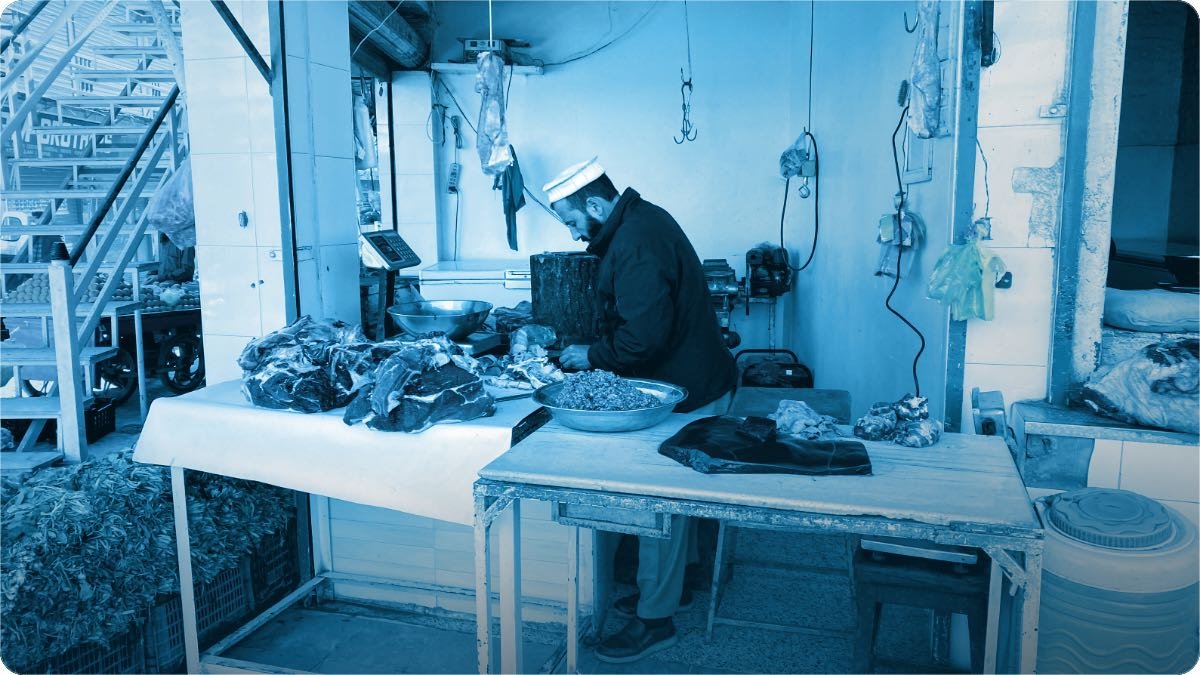
Treat it as a loan, not a favour, and both of you stay friends. Ask what the money is for and where the repayment is coming from, agree a date, write it down, and lend only what your shop can be without for a month. If the honest answer is no, say no on the same day.
Why this ask is not like a customer's
A customer asking for credit is asking for goods. A shopkeeper beside you is asking for working capital, and that is a different animal altogether.
He is not short because he is careless. He is short because a payment landed late, or a supplier demanded cash, or his own book is full of people who have not paid him. You know all of this because it happens to you as well, and that shared understanding is exactly what makes the ask so hard to refuse.
There is also the street to think about. You will see this man every single day, at the shutter in the morning and at closing. A refusal that lands badly does not disappear the way a customer's disappointment does; it sits beside you for years.
So the question is never really "can I spare it". It is "can I lend this in a way that survives whatever happens next", because something usually does.
What it costs when the money leaves your galla
Money out of the till is not idle money. It was going to do something.
Say Rs 20,000 out of the galla for two weeks
That last row is the one everybody underestimates. Two weeks is what is asked for and almost nobody plans to break the promise, but his repayment depends on his own recovery, and his recovery is exactly as unreliable as yours.
Do not charge him for the delay. No extra amount for lateness, no share of his profit, nothing on top. A loan between neighbours that grows is a loan that ends the relationship, and the sum is never worth what it costs you.
What you should do instead is size the loan against the delay you have not planned for. Ask what your shop looks like if this money is gone for seven weeks rather than two. If that picture is still fine, lend. If it means you cannot pay your own supplier, the answer is no, however good he is for it, and that is not a judgement about him at all.
Three questions before you say yes
Most bad loans between shops were decided in about four seconds, standing up, with somebody waiting.
Ask yourself these before you say yes
- Can my shop run normally for a month without this money?
- Do I know what he needs it for, in one plain sentence?
- Where is the money coming from that pays me back?
- Would I still greet him at the shutter if this never came back?
- Have I written the amount and the date somewhere we both accept?
- Am I saying yes because I want to, or because the street is watching?
The middle question does the heavy lifting. "What is the money for" sounds intrusive but is completely normal between two business people, and the answer tells you almost everything. Stock for a confirmed order is a very different loan from covering a hole that keeps reappearing.
The last one is worth being honest with yourself about. Plenty of loans on a market street are given because refusing in front of two other shopkeepers felt impossible. That is a real pressure, and it is also the single worst reason to move Rs 20,000. If that is what is driving the yes, the fix is a rule you can name out loud rather than a decision you make in public.
And keep this money separate in your head from your own household. A loan out of the shop is shop money and belongs in the shop's accounts, which is the same discipline as keeping shop money and house money apart.
Start your digital khata today
Free to start. Works offline. English, Roman Urdu & Hinglish. Your customers get their app free, forever.
Stock is a loan too
Very often what he wants is not cash. It is four cartons to get through a weekend when his own delivery is stuck.
This is usually the better thing to give, and shopkeepers underrate it. It costs you the buying price rather than the selling price, it does not empty the till, and it comes back either as goods or as money at a figure you both understand.
But it is still a loan, and it needs the same treatment. Write down what went, at what rate, and on what date it is coming back. "Four cartons of the small size, at my cost, back by Friday" is a sentence that cannot be misremembered.
Where it gets tangled is when the same person is also somebody you buy from occasionally. Then goods are moving in both directions and the totals start arguing with each other, which is the exact trouble described in when your customer is also your supplier. Keep the two sides on separate lines and settle them one at a time.
Write it down, especially between friends
The instinct is that writing it insults him. In practice, the opposite is true, and every experienced shopkeeper on the street knows it.
An unwritten loan has no date, no exact figure after a few part payments, and no answer when one of you remembers it differently. What insults a man is not a written line. It is being asked, eight months later, for an amount he believes he already returned.
Keep it in the same place as everything else you are owed. Wasoolo lets you record money you have lent out separately from customer udhaar, so a neighbour's Rs 20,000 does not hide inside your shop balances, and the part payments come off it as they arrive.
Then read it back to him once, at the moment you hand the money over, and never again unless there is a reason. That is the whole of it: one clear line, one clear reading, and then trust doing its job with something solid underneath it. It is the same discipline that makes lending to family and friends survivable.
When it does not come back
Some of these loans go bad, and how you handle the first month decides whether you get the money or a long silence.
Ask early and ask small. The week after the agreed date, not four months later, and about a part of it rather than all of it. A neighbour who cannot pay Rs 20,000 can often pay Rs 5,000, and once something starts moving, the rest usually follows.
Do it privately and never at his counter while customers are standing there. Public pressure between shops does damage that outlasts the amount, and it makes every other shopkeeper on the street quietly decide you are trouble.
If he genuinely cannot pay, take goods, take instalments, take whatever is real. And if he starts avoiding you, treat it the way you would treat any customer who has begun to disappear: stay calm, stay in contact, keep the door open, and stop lending anything further until the balance moves.
Start your digital khata today
Free to start. Works offline. English, Roman Urdu & Hinglish. Your customers get their app free, forever.
Common questions
Should I ever lend to a shop that sells the same things I do?
You can, and it happens on every market street, but be clear that you are funding a competitor's stock and be at peace with that before you agree. The risk is not usually that he undercuts you deliberately. It is that your money strengthens his shelf during the exact weeks yours is thin, and you will feel that on a slow afternoon. Lend the amount you can watch working across the road without resentment, and not a rupee more.
He wants to keep taking my goods and paying whenever he sells them. Is that a loan?
It is, and it is one of the easiest ways for a large balance to build without anybody noticing. Goods going out on an open arrangement with no date is credit, and it needs a ceiling and a settlement day in exactly the same way a customer's account does. Fix a limit, settle it on a set day of every month, and keep the running total somewhere you both can see. Otherwise you have quietly become his supplier without the terms a supplier would insist on.
How much should I be willing to lend at all?
A useful rule is the amount you could lose entirely without changing anything about how your shop runs. Not the amount you happen to have in the drawer, which is usually much larger and often already spoken for by your own supplier payments. Working that out honestly needs you to know your real position, which is why a shop with a reliable daily count can answer this in seconds and a shop without one cannot.
He is asking again, and the earlier amount is still out. What do I say?
Say the truth in one calm sentence and do not decorate it. "The earlier amount is still open, so I cannot add to it, but let us settle a date for that one." This is not a refusal of him, it is a refusal of a second loan on top of an unresolved first, which any shopkeeper understands. What you must not do is agree in order to end the conversation and then feel bitter for a year.
Should I take something as security?
Between neighbouring shops it is unusual and it can feel like an accusation, so most people do not. If the amount is large enough that you would want security, that is a strong signal the amount is too large for this kind of arrangement in the first place. Reduce it to a size where a written line and a date are protection enough, or give goods instead of cash so that your exposure is at cost rather than at value.
Does helping a neighbour actually come back to me?
Often, though not in the way people expect. What comes back is rarely the same favour returned; it is a shopkeeper who sends customers your way, warns you when a supplier's rates are moving, and covers your counter for an hour when you have to leave. That is genuinely valuable and it is a good reason to help. It is not a reason to lend money your shop cannot spare, because a market street loses far more when a shop closes than when a favour is refused.